You’re looking to step up your real estate game, aren’t you? You want to move beyond the guesswork and the endless hours spent sifting through listings. You’re ready to leverage the power of artificial intelligence to unearth those hidden gems, the profitable property deals that others miss. And you’re in the right place. This isn’t science fiction anymore; AI is actively revolutionizing how we find and secure prime investment opportunities in the property market. You can too. Let’s break down how you can harness this transformative technology to your financial advantage.
You’re accustomed to market research, but imagine doing that on steroids. This is where AI truly shines. Instead of you staring at spreadsheets and digging through multiple websites, AI tools are designed to perform hyper-efficient, comprehensive data analysis. Think about the sheer volume of information out there – property listings on the MLS, public records detailing ownership, tax history, liens, and a myriad of other data points that paint a picture of a property’s trajectory. Manually processing even a fraction of this is a Herculean task. AI, however, thrives on it.
The Scale of AI’s Data Processing Power
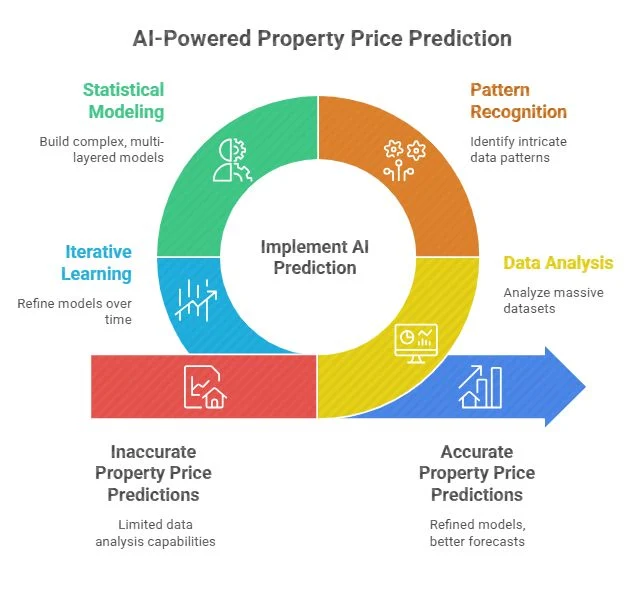
These powerful AI platforms, you see, can analyze upwards of 10,000 listings on a daily basis. This isn’t just a superficial eyeball test. They’re meticulously comparing an astounding range of factors simultaneously. We’re talking about price trends, rental income potential, historical appreciation rates, vacancy rates, local economic indicators, demographic shifts, and so much more. They process over 50 different data points for each property, creating a rich tapestry of information that would take a human team weeks, if not months, to compile.
Connecting the Dots: MLS, Public Records, and Market Trends
What makes AI so effective is its ability to synthesize disparate data sources. It doesn’t just look at what’s currently for sale. It integrates data from the Multiple Listing Service (MLS), scraping the most up-to-date information on active and recently sold properties. Simultaneously, it dives into public records, uncovering historical ownership, property tax information, zoning regulations, and any potential encumbrances. Crucially, it layers this with broader market trends – economic forecasts, employment growth in the area, new infrastructure projects, and shifts in consumer behavior. processing all of this in mere seconds, AI can pinpoint opportunities that are invisible to the naked eye and the slow crawl of manual research. You gain access to a strategic overview that allows you to see the forest and the trees, identifying properties that are poised for growth before the general market catches on.
Riding the Wave: Predictive Analytics for Early Advantage
You’re not just looking for current deals; you’re looking for the deals that will become profitable, the ones with future upside. This is where AI’s predictive capabilities become your secret weapon. The property market, like any market, is cyclical and influenced by a multitude of evolving factors. AI can analyze these patterns and predict future trends with a remarkable degree of accuracy.
Identifying Emerging Neighborhoods Before the Boom
Imagine a scenario where you could invest in a neighborhood before prices skyrocket, before it becomes saturated with eager buyers. AI has demonstrated this capability. In recent testing, AI tools were able to identify emerging neighborhoods that saw significant price jumps a full 4 to 6 months in advance. This isn’t by chance; it’s the result of algorithms trained on vast datasets, detecting subtle indicators of impending growth. These can include rising job creation, improving school district ratings, new transit developments, or a surge in inquiries from potential renters. being among the first to invest in these areas, you position yourself to benefit from the subsequent appreciation.
Forecasting Rent Growth and Demand Surges
Profitability in real estate isn’t solely about appreciation; rental income is a critical component. AI can meticulously analyze factors that influence rental demand and pricing. Predictive algorithms can identify which neighborhoods are exhibiting the strongest potential for rent growth, taking into account factors like population influx, limited new housing supply, and increasing demand from specific demographics. Furthermore, AI can forecast which markets are likely to experience increased demand from renters or buyers. This predictive insight allows you to make informed decisions about where to invest for consistent cash flow and long-term value creation, ensuring your investment performs optimally not just today, but well into the future. You’re not just buying bricks and mortar; you’re investing in a future trend.
The Human Element, Amplified: Identifying Motivated Sellers
While AI excels at crunching numbers and predicting trends, it can also help you identify the less quantifiable, yet incredibly important, factor of a motivated seller. These are the individuals who are more likely to accept attractive offers, often due to urgent circumstances. While a human touch is crucial for the negotiation, AI can significantly streamline the process of finding these sellers.
The Power of “List Stacking”
AI employs sophisticated techniques like “list stacking” to achieve this. This isn’t just looking at one or two indicators; it’s about layering multiple data points to create a probability score for a seller’s motivation. Imagine the AI sifting through public records and identifying properties with specific red flags that signal a seller might need to liquidate quickly.
Decoding the Signals of Urgency
What kinds of signals can AI detect? Consider properties where property taxes are significantly owed, indicating a potential financial strain. Divorce filings or bankruptcy proceedings are also strong indicators that a seller might be eager to offload assets. Similarly, loan defaults, even minor ones, can signal an impending need for cash. identifying properties with combinations of these indicators, AI can flag them as high-priority leads for you to investigate further. This allows you to focus your efforts on situations where a win-win scenario is more probable, leading to quicker closings and potentially more favorable terms for you. You’re not just finding properties; you’re finding people who have a compelling reason to sell, freeing up your negotiation efforts.
The Tangible Results: How AI Delivers Superior Performance
You might be wondering if all this technological sophistication translates into real-world, bottom-line results. The answer is a resounding yes. The data speaks for itself, showcasing how AI-powered strategies consistently outperform traditional methods. This isn’t just about marginal gains; it’s about significant improvements in speed, profitability, and efficiency.
Closing Deals at an Unprecedented Pace
One of the most immediate benefits you’ll experience is a dramatic acceleration in your deal-closing timeline. Landlords and investors who are leveraging AI-powered analysis are reporting that they can close deals up to three times faster than those relying on manual research methods. Think about that. Every week or month saved in the acquisition process translates directly into reduced holding costs, faster access to rental income, and a quicker return on your investment capital. This speed advantage is crucial in a competitive market, allowing you to seize opportunities before they disappear.
Outperforming Manually Selected Purchases
Beyond speed, AI-driven property selection demonstrates a superior return on investment (ROI). In rigorous testing conducted in 2026, properties identified and vetted through AI analysis yielded an impressive 18% higher actual ROI compared to properties that were selected through traditional, manual research methods. This means your capital is working harder for you, generating more profit per dollar invested. This isn’t just a speculative difference; it’s a statistically significant increase in profitability, directly attributable to the comprehensive and insightful analysis that AI provides.
Minimizing Holding Time and Carrying Costs
Another significant advantage AI offers is its ability to accurately predict how quickly a property is likely to sell. This isn’t a trivial detail. understanding the potential market velocity of a property, you can better manage your holding time and associated carrying costs. Knowing a property might sell in 30 days versus 90 days allows you to refine your financial projections, optimize your marketing strategy, and minimize expenses like property taxes, insurance, and loan interest during the acquisition phase. This predictive insight contributes directly to your overall profitability by reducing unnecessary expenditures and freeing up your capital for your next investment. Essentially, AI helps you spend less time and money waiting for your investment to pay off.
Putting AI to Work: Real-World Applications and Strategies
| Metrics | Description |
|---|---|
| Property Data | Information about property location, size, condition, and market value. |
| AI Algorithms | Advanced algorithms to analyze property data and identify profitable deals. |
| Market Trends | Data on current real estate market trends and predictions for future growth. |
| Financial Analysis | Tools to calculate potential return on investment and profitability of property deals. |
| Risk Assessment | AI models to assess the potential risks associated with property investments. |
You’ve seen the potential, but how does this translate into practical application for you? The good news is that AI is no longer confined to research labs; it’s being integrated into user-friendly platforms and services designed for investors like you.
AI-Powered Brokerage Platforms: A Smarter Way to Buy
Consider the emergence of AI-powered brokerage platforms. These aren’t just digital listing sites; they incorporate the analytical power of AI directly into the buying process. As an example, one such platform recently assisted a buyer in saving a remarkable $45,000 at closing. How? utilizing AI to conduct a deep comparison of neighborhood sales data, analyze inspection reports for potential issues, and even assess the overall market health of the area. This comprehensive analysis empowered the buyer with such strong leverage and data-driven insights that they were able to negotiate a significantly better price, demonstrating the tangible financial benefits of AI in the transaction itself.
Beyond Acquisitions: AI for Lead Qualification and Communication
The power of AI extends beyond just finding the property. In the realm of client relations and lead management, AI is also proving to be invaluable. AI-powered chatbots and voice bots are now capable of engaging with potential leads, asking qualifying questions, and handling initial conversations at scale. This automation frees up your valuable time, allowing you to focus on the more complex aspects of deal negotiation and property management. These AI agents can consistently engage with a larger volume of leads than a human could manage, identifying serious prospects and nurturing those who show genuine interest. Over time, this can lead to a significant increase in your conversion rates, ensuring that you’re not missing out on potential opportunities due to capacity limitations. You can have more conversations, qualify more leads, and ultimately, convert more deals.
embracing AI, you’re not just adopting a new technology; you’re adopting a more intelligent, efficient, and profitable approach to real estate investment. The data is clear, the use cases are expanding, and the results are undeniable. It’s time to leverage the power of artificial intelligence to find your next profitable property deal. Your future returns will thank you for it.
FAQs
What is AI in real estate?
AI in real estate refers to the use of artificial intelligence technology to analyze and process large amounts of data to identify profitable property deals. This technology can help investors and real estate professionals make informed decisions by predicting market trends, property values, and potential investment opportunities.
How does AI help in finding profitable property deals?
AI helps in finding profitable property deals by analyzing various data points such as property prices, market trends, location demographics, and historical sales data. This analysis can help identify undervalued properties, emerging markets, and potential investment opportunities that may not be immediately apparent to human investors.
What are the benefits of using AI in real estate investing?
The benefits of using AI in real estate investing include the ability to quickly and accurately analyze large amounts of data, identify potential investment opportunities, predict market trends, and make informed decisions. AI can also help investors save time and resources by automating the process of property analysis and deal sourcing.
Are there any limitations to using AI in real estate investing?
While AI can provide valuable insights and predictions, it is important to note that it is not infallible. The technology relies on historical data and market trends, which may not always accurately predict future outcomes. Additionally, AI may not fully account for intangible factors such as local regulations, community dynamics, and property condition.
How can individuals get started with using AI for property investing?
Individuals can get started with using AI for property investing by researching and selecting reputable AI-powered real estate platforms or tools. These platforms often offer features such as property analysis, market predictions, and investment recommendations. It is important for individuals to thoroughly understand how the AI technology works and to supplement its insights with their own research and due diligence.