Your foray into the real estate market, whether as a first-time buyer or a seasoned investor, hinges on intelligent financial planning. This isn’t about chasing speculative booms or relying on gut feelings; it’s about a structured, informed approach that safeguards your capital and maximizes your returns. This guide will equip you with the essential financial strategies to navigate the complexities of property acquisition and ownership.
Before you even consider perusing listings, a thorough self-assessment of your financial standing is paramount. This initial step sets the foundation for all subsequent decisions, preventing overextension and ensuring a sustainable path forward.
Assessing Your Current Financial Health
- Detailing Your Income Streams: Objectively list all sources of income, including salaries, freelance earnings, rental income from existing properties, and any other verifiable revenue. Be realistic about consistency and potential fluctuations.
- Cataloging Your Expenses: Create a comprehensive budget that tracks all your outgoing funds. Categorize these expenses into fixed (mortgage, rent, loan payments) and variable (utilities, groceries, entertainment). Understanding where your money goes is crucial for identifying areas where you can save.
- Evaluating Your Debts: Compile a thorough list of all outstanding debts, including credit card balances, personal loans, student loans, and any existing mortgages. Note the interest rates and minimum payments for each. High-interest debt can significantly impede your ability to save for a down payment or qualify for favorable mortgage terms.
- Calculating Your Net Worth: This provides a snapshot of your overall financial position. Subtract your total liabilities from your total assets (cash, savings, investments, existing property equity). A positive net worth indicates financial stability, while a negative one requires immediate attention.
Establishing Realistic Financial Goals
Your property goals must align with your financial reality. Vague aspirations lead to unfocused planning and potential disappointment.
- Defining Short-Term vs. Long-Term Objectives: Are you looking to buy a primary residence within the next two years, or are you aiming to build a rental portfolio over the next decade? Short-term goals often involve immediate affordability, while long-term objectives may require accumulating more capital for larger investments or diversification.
- Quantifying Your Savings Targets: Based on your desired property type and location, determine the required down payment, closing costs, and a reserve fund for unexpected expenses. Divide these figures by your targeted timeline to establish monthly savings goals.
- Prioritizing Your Investment Strategy: For investors, this involves deciding on your preferred property type (residential, commercial, multi-family), your target rental yield, and your risk tolerance. These choices will dictate the capital required for each investment.
Securing Your Financing
The ability to secure adequate and appropriate financing is a cornerstone of successful real estate ventures. This involves more than just walking into a bank; it necessitates preparation and a deep understanding of lending products.
Understanding Mortgage Options
- Fixed-Rate vs. Adjustable-Rate Mortgages (ARMs): Analyze the pros and cons of each. Fixed-rate mortgages offer predictable monthly payments, providing stability. ARMs can offer lower initial rates but come with the risk of payment increases if interest rates rise. Consider your risk tolerance and the current interest rate environment.
- Conventional Loans: These are not backed by government agencies and typically require a higher credit score and a larger down payment. They are often the most straightforward option for well-qualified buyers.
- Government-Backed Loans (FHA, VA, USDA): These programs can offer more accessible terms for certain borrowers, including lower down payments and more flexible credit requirements. Understand the eligibility criteria and the potential for mortgage insurance premiums.
- Interest-Only Mortgages: While they can reduce initial monthly payments, they do not build equity. This option is generally only advisable for sophisticated investors with a clear exit strategy.
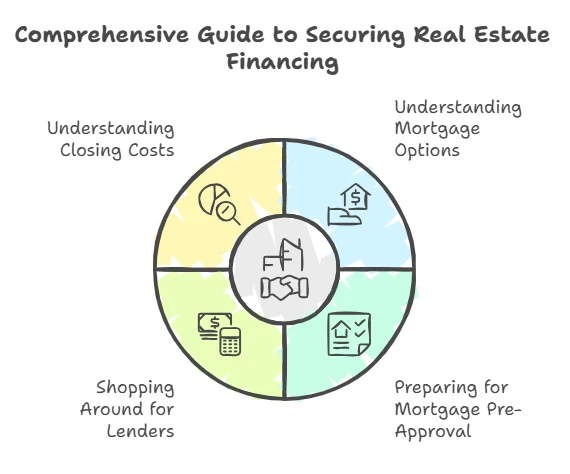
Preparing for Mortgage Pre-Approval
- Improving Your Credit Score: Your credit score significantly impacts your interest rate and loan approval chances. Focus on paying down existing debt, making timely payments, and disputing any inaccuracies on your credit report.
- Gathering Necessary Documentation: Lenders will require proof of income (pay stubs, tax returns), employment verification, bank statements, and details of your assets and liabilities. Having this organized upfront will expedite the process.
- Shopping Around for Lenders: Don’t settle for the first offer you receive. Compare rates, fees, and loan terms from multiple financial institutions. A small difference in interest rate can translate to tens of thousands of dollars saved over the life of a loan.
- Understanding Closing Costs: These are fees associated with finalizing your mortgage and transferring property ownership. They typically include appraisal fees, origination fees, title insurance, and attorney fees. Factor these into your overall budget.
Budgeting for Property Ownership Beyond the Purchase Price
The initial acquisition cost is just the beginning. A prudent financial plan anticipates and accounts for the ongoing expenses that come with owning property.
Estimating Ongoing Ownership Costs
- Property Taxes: These are levied by local governments and can vary significantly by location. Research the tax rates in your target area and factor them into your monthly housing expenses.
- Homeowner’s Insurance: This protects you against damage to your property. The cost will depend on factors like the value of your home, your location, and your deductible.
- Private Mortgage Insurance (PMI) / FHA Mortgage Insurance Premium (MIP): If your down payment is less than 20% for a conventional loan, or if you have an FHA loan, you will likely have to pay for mortgage insurance. Understand when this can be removed.
- Homeowner’s Association (HOA) Fees: If the property is part of a community with an HOA, you will be responsible for paying regular fees for shared amenities and maintenance.
Developing a Maintenance and Repair Fund
- The “1% Rule” for Investors: A common guideline for rental properties is to budget 1% of the property’s value annually for maintenance and repairs. This is a conservative estimate and may need adjustment based on the age and condition of the property.
- Assessing the Property’s Condition: During your due diligence, pay close attention to the state of the roof, HVAC system, plumbing, and electrical wiring. Older systems are more likely to require immediate or near-future repairs.
- Creating a Contingency Reserve: Beyond regular maintenance, it’s crucial to have a separate fund for unexpected major repairs or emergencies. This reserve should be easily accessible but not tapped into for non-essential expenses.
Investing Smartly in Real Estate
For those viewing property as an investment, financial planning takes on a different dimension, focusing on returns, risk management, and long-term wealth creation.
Analyzing Investment Viability
- Calculating Rental Yields: For income-generating properties, determine the gross rental yield (annual rent divided by property value) and the net rental yield (after deducting operating expenses). Aim for yields that align with your financial goals and risk tolerance.
- Understanding Cap Rates: Capitalization rates are a measure of a property’s profitability based on its income. It’s calculated as Net Operating Income (NOI) divided by property value. A higher cap rate generally indicates a higher potential return.
- Performing a Cash-On-Cash Return Analysis: This metric measures the annual pre-tax cash flow generated by an investment property relative to the actual cash invested. It’s a valuable tool for comparing different investment opportunities.
- Considering Appreciation Potential: While not guaranteed, the potential for property value appreciation is a significant factor in real estate investment. Research market trends, demographic shifts, and economic development in the area.
Diversifying Your Real Estate Portfolio
- Geographical Diversification: Owning properties in different locations can mitigate risks associated with local economic downturns or natural disasters.
- Property Type Diversification: Consider a mix of residential, commercial, or multi-family properties to spread risk and tap into different market dynamics.
- Investment Strategy Diversification: Explore options like real estate investment trusts (REITs) or crowdfunding platforms as complementary strategies to direct property ownership.
Building Wealth Through Real Estate
| Metrics | Data |
|---|---|
| Property Type | Residential, Commercial |
| Investment Strategy | Buy and Hold, Fix and Flip |
| Financing Options | Mortgage, Hard Money Loan |
| ROI (Return on Investment) | 10-15% |
| Risk Assessment | Market Analysis, Property Inspection |
Smart financial planning is not just about acquiring property; it’s about leveraging it to build and preserve wealth over the long term.
Strategic Use of Leverage
- Optimizing Debt-to-Equity Ratio: While leverage can amplify returns, excessive debt can also magnify losses. Maintain a healthy debt-to-equity ratio that you are comfortable managing.
- Refinancing for Better Terms: As your financial situation improves or interest rates decrease, consider refinancing your mortgage to secure a lower interest rate, reduce your monthly payments, or tap into equity for further investment.
- Debt Reduction Strategies: Prioritize paying down high-interest debt on your investment properties to improve cash flow and reduce risk.
Tax Planning and Efficiency
- Understanding Depreciation: For investment properties, you can generally depreciate the value of the building (not the land) over its useful life, creating a tax deduction that reduces your taxable income.
- 1031 Exchanges: This allows investors to defer capital gains taxes on the sale of an investment property by reinvesting the proceeds into a like-kind property.
- Consulting with a Tax Professional: Real estate tax laws are complex and can change. Working with a qualified tax advisor is essential for maximizing tax benefits and ensuring compliance.
Long-Term Wealth Preservation and Growth
- Regular Portfolio Review: Periodically assess the performance of your real estate investments. Rebalance your portfolio if necessary, or consider divesting underperforming assets.
- Estate Planning: Integrate your real estate holdings into your overall estate plan to ensure smooth transfer of assets to your heirs and minimize potential estate taxes.
- Adapting to Market Changes: The real estate market is dynamic. Stay informed about economic indicators, demographic shifts, and regulatory changes that could impact your investments. Your financial plan should be flexible enough to adapt to these evolving conditions.
embracing a disciplined and informed approach to financial planning, you empower yourself to make sound decisions in the real estate market, transforming potential challenges into opportunities for growth and long-term financial security.
FAQs
What is financial planning for real estate?
Financial planning for real estate involves creating a comprehensive strategy to manage and optimize the financial aspects of buying, owning, and investing in real estate properties. This includes budgeting, saving, investing, and managing debt related to real estate transactions.
What are smart strategies for real estate buyers?
Smart strategies for real estate buyers include setting a realistic budget, obtaining pre-approval for a mortgage, researching the local real estate market, considering long-term financial goals, and working with a qualified real estate agent or financial advisor.
What are smart strategies for real estate investors?
Smart strategies for real estate investors include conducting thorough market research, diversifying their real estate portfolio, understanding the potential risks and rewards of different investment properties, leveraging financing options, and staying informed about tax implications and regulations.
How can financial planning help real estate buyers and investors?
Financial planning can help real estate buyers and investors by providing a clear roadmap for achieving their real estate goals, identifying potential financial risks, maximizing investment returns, and ensuring long-term financial stability.
What are some common mistakes to avoid in real estate financial planning?
Common mistakes to avoid in real estate financial planning include underestimating the true cost of homeownership or property investment, overextending financially, neglecting to consider potential market fluctuations, failing to diversify investments, and not seeking professional financial advice when needed.