
If you are researching a 1031 exchange guide because you want to sell an investment property without losing a large portion of your profit to capital gains tax, you are in the right place. A 1031 exchange is one of the most powerful tools available to real estate investors, allowing them to sell one property and reinvest the proceeds into another qualifying property while deferring taxes. This guide breaks down how the process works, the rules you need to follow, and the mistakes that trip up even experienced investors.
What Is a 1031 Exchange
A 1031 exchange, named after Section 1031 of the Internal Revenue Code, allows an investor to sell a property used for business or investment purposes and reinvest the proceeds into a similar property. As long as the transaction follows IRS guidelines, capital gains tax on the sale can be deferred rather than paid immediately.
This does not mean the tax disappears forever. It simply gets pushed into the future, giving investors more capital to work with today.
How Does a 1031 Exchange Work
The basic idea behind a 1031 exchange is simple. Instead of selling a property and pocketing the proceeds, the seller directs those funds toward purchasing another qualifying property. Because the investor never actually takes possession of the cash, the IRS treats the transaction as a continuation of the original investment rather than a taxable sale.
Like Kind Property Requirements
The properties involved in the exchange must be considered like kind. This term is broader than most people expect. It does not mean the properties must be identical in type or use. A rental duplex can be exchanged for raw land, and an office building can be exchanged for a warehouse, as long as both properties are held for investment or business purposes.
Qualified Intermediary Role
A qualified intermediary, sometimes called an exchange facilitator, plays a critical role in the process. This third party holds the sale proceeds so the investor never gains direct control of the funds. Without a qualified intermediary, the exchange will not meet IRS requirements and the transaction becomes fully taxable.
Types of 1031 Exchanges
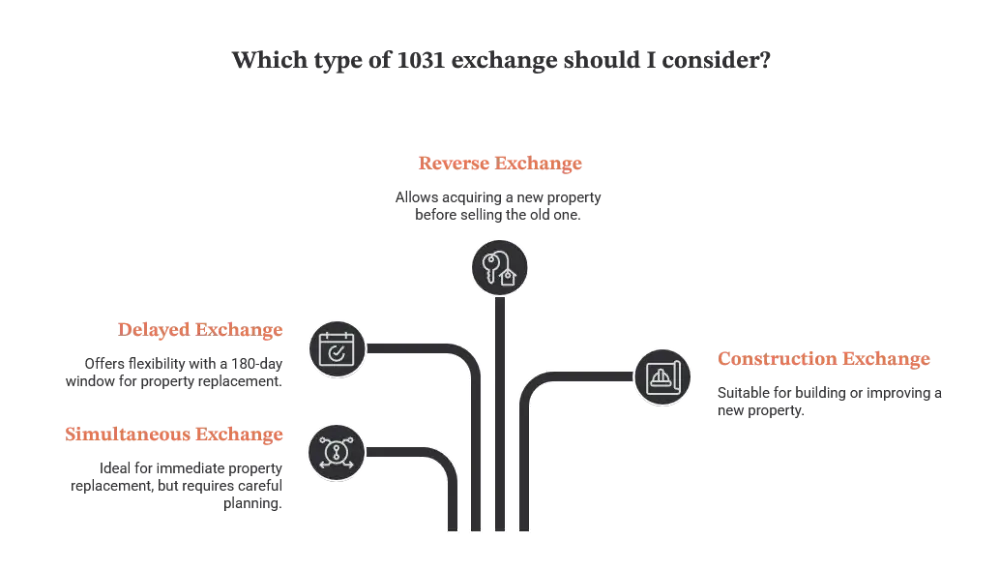
Not every exchange looks the same. Depending on timing and circumstances, investors typically use one of the following structures.
Simultaneous Exchange
This is the most straightforward version, where the old property and the new property close on the same day. It requires precise coordination and is less common today due to the flexibility of delayed exchanges.
Delayed Exchange
The delayed exchange is the most widely used structure. The investor sells the original property first, then has a set window of time to identify and purchase a replacement property.
Reverse Exchange
In a reverse exchange, the replacement property is purchased before the original property is sold. This approach requires more cash flexibility since the investor technically owns two properties for a short period.
Construction or Improvement Exchange
This type allows exchange funds to be used for improvements on the replacement property, as long as the work is completed within the allowed exchange period.
Key Rules and Deadlines
Timing is everything in a 1031 exchange, and missing a deadline can disqualify the entire transaction.
The Identification Window
After closing on the sale of the original property, the investor has a limited number of days to formally identify potential replacement properties in writing to the qualified intermediary.
The Exchange Completion Period
The purchase of the replacement property must be completed within a set number of days from the original sale date. This window includes the identification period, so investors need to move quickly and decisively.
Benefits of a 1031 Exchange
Investors turn to 1031 exchanges for several reasons.
Tax deferral allows more capital to remain invested rather than being paid out immediately.
Portfolio growth becomes easier since investors can move into larger or more strategically located properties without a heavy tax burden slowing them down.
Diversification is possible because like kind rules allow investors to shift between property types such as residential, commercial, or land.
Estate planning advantages exist as well, since heirs may receive a stepped up basis on inherited property, potentially eliminating deferred gains altogether.
Common Mistakes to Avoid
Even seasoned investors run into trouble with 1031 exchanges. Missing identification deadlines is one of the most frequent issues, often caused by underestimating how quickly the clock starts ticking after closing.
Another common mistake is failing to use a qualified intermediary correctly, or attempting to touch the sale proceeds directly, which immediately disqualifies the exchange.
Some investors also misjudge what counts as like kind property, assuming personal residences or primary homes qualify when they generally do not.
Finally, underestimating financing needs for the replacement property can create last minute scrambling that jeopardizes the entire exchange.
Is a 1031 Exchange Right for You
A 1031 exchange tends to make the most sense for investors who plan to stay active in real estate rather than cash out completely. It works well for those looking to upgrade properties, consolidate multiple properties into one, or shift investment focus to a new market or property type.
It may not be the right fit for someone who wants to exit real estate investing altogether, since the deferred tax will eventually come due unless the property is passed on through an estate.
Speaking with a tax professional or exchange specialist before starting the process is strongly recommended, since every situation carries its own nuances.
Conclusion
A 1031 exchange offers real estate investors a legitimate and widely used strategy to defer capital gains tax while continuing to build wealth through property investment. Understanding the rules around like kind property, working with a qualified intermediary, and respecting strict deadlines are all essential to a successful exchange. With the right planning and professional guidance, a 1031 exchange can be a powerful part of a long term real estate strategy.
Frequently Asked Questions
What is the main purpose of a 1031 exchange?
The main purpose is to allow real estate investors to defer capital gains tax by reinvesting sale proceeds into another qualifying property instead of cashing out.
Can I use a 1031 exchange on my primary residence?
No, a 1031 exchange only applies to property held for investment or business purposes, not a primary residence.
How long do I have to identify a replacement property?
Investors must formally identify potential replacement properties within a limited window after closing on the original property, typically counted in days rather than months.
Do I need a qualified intermediary for every exchange?
Yes, a qualified intermediary is required to hold the sale proceeds and ensure the transaction meets IRS requirements for deferral.
What happens if I miss the exchange deadline?
If the deadline is missed, the transaction is treated as a regular taxable sale and capital gains tax becomes due immediately.