
Real estate cash flow explained simply means the money left in your pocket after all property related expenses are paid from the rental income you collect. It is one of the most important numbers a property owner can track because it shows whether an investment is actually putting money in your hands or quietly draining it. Understanding this concept helps investors make smarter decisions and build a portfolio that supports long term financial goals.
What Is Real Estate Cash Flow
Real estate cash flow is the net amount of income a rental property generates after every operating cost and financial obligation has been subtracted. This includes rent collected from tenants minus expenses such as maintenance, insurance, management fees, taxes, and mortgage payments if the property is financed.
When the remaining amount is positive, the property is generating income for the owner. When it is negative, the owner is paying out of pocket to keep the property running.
Why It Is Called “Cash” Flow
The term cash is used because this calculation focuses purely on actual money moving in and out of a bank account. It does not include paper gains like property appreciation or tax benefits. Cash flow is about real, spendable income.
Why Cash Flow Matters for Investors
Cash flow is often considered the heartbeat of a rental property investment. It reflects the ongoing financial health of the asset rather than its potential future value.
A property with strong cash flow can support itself, cover unexpected repairs, and still leave profit for the owner. A property with weak or negative cash flow can become a financial burden even if its value is expected to rise later.
Cash Flow vs Appreciation
Appreciation refers to the increase in a property’s value over time, while cash flow refers to income generated right now. Relying only on appreciation can be risky since market values can be unpredictable. Cash flow provides a more stable and measurable source of return.
How to Calculate Real Estate Cash Flow
Calculating cash flow involves a few simple steps that give a clear financial picture of the property.
Gross Rental Income
This is the total income collected from tenants before any expenses are deducted. It includes monthly rent and any additional income such as parking or storage fees.
Operating Expenses
Operating expenses cover the everyday cost of running the property. Common examples include property management fees, repairs, utilities, insurance, and property taxes.
Net Operating Income
Net operating income is calculated by subtracting operating expenses from gross rental income. This figure shows how much the property earns before financing costs are considered.
Cash Flow After Financing
If the property has a mortgage, the loan payment is subtracted from the net operating income. What remains is the true cash flow, representing the actual profit or loss generated each month.
Types of Real Estate Cash Flow
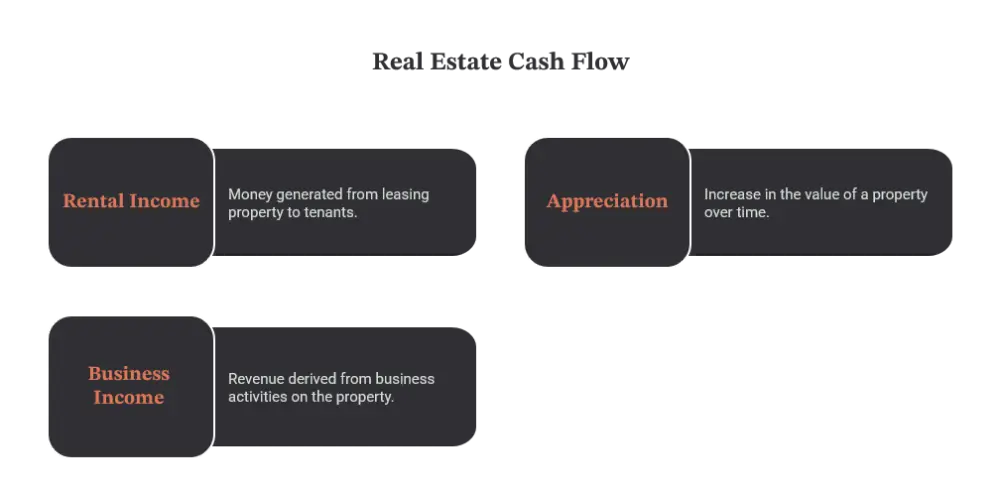
Not all rental properties perform the same way financially. Cash flow generally falls into three categories.
Positive Cash Flow
Positive cash flow occurs when rental income exceeds all expenses and financing costs. This is the ideal outcome for most investors since it means the property is generating consistent profit.
Negative Cash Flow
Negative cash flow happens when expenses exceed rental income. Some investors accept short term negative cash flow if they expect strong future appreciation, but it requires careful planning and financial stability.
Breakeven Cash Flow
Breakeven cash flow means income and expenses are roughly equal. The property covers its own costs but does not generate extra profit for the owner.
Factors That Affect Cash Flow
Several elements influence how much cash flow a property produces. Location plays a major role since rental demand and vacancy rates vary widely between areas. Property condition also matters because older properties often require more frequent repairs.
Tenant quality affects consistency of income, as reliable tenants reduce the risk of missed payments. Management efficiency is another factor, since well managed properties tend to experience fewer costly surprises.
Seasonal and Market Trends
Rental markets can shift with the seasons or broader economic trends. Understanding these patterns helps investors anticipate changes in occupancy and income throughout the year.
Tips to Improve Real Estate Cash Flow
Improving cash flow often comes down to increasing income, reducing expenses, or both.
Increase Rental Income
Regularly reviewing market rental rates ensures the property is not underpriced. Adding value through minor upgrades can also justify higher rent over time.
Reduce Operating Costs
Routine maintenance helps prevent expensive emergency repairs. Comparing service providers for insurance and management can also help control ongoing costs.
Minimize Vacancy
Vacant units generate no income while still incurring expenses. Prompt marketing, responsive communication, and tenant retention strategies help keep occupancy high.
Common Mistakes That Hurt Cash Flow
Many new investors underestimate expenses when evaluating a property, leading to inaccurate cash flow projections. Ignoring maintenance reserves is another common issue, since unexpected repairs can quickly erode profits.
Some owners also overlook the impact of vacancy periods, assuming a property will always be occupied. Realistic planning for these gaps is essential for accurate cash flow forecasting.
Conclusion
Real estate cash flow explained in simple terms comes down to understanding what money actually flows into and out of a property. It is a powerful indicator of an investment’s health and sustainability. tracking income, controlling expenses, and planning for the unexpected, property owners can build a portfolio that generates steady and reliable returns over time.
Frequently Asked Questions
What is real estate cash flow?
Real estate cash flow is the net income remaining after all property expenses and financing costs are subtracted from rental income.
Why is positive cash flow important in real estate?
Positive cash flow ensures a property generates consistent profit and can cover unexpected expenses without financial strain on the owner.
What is the difference between cash flow and appreciation?
Cash flow refers to current income generated by a property, while appreciation refers to the increase in property value over time.
What factors affect real estate cash flow the most?
Location, property condition, tenant reliability, and management efficiency are among the biggest factors influencing cash flow.
How can I improve cash flow on a rental property?
Cash flow can be improved by increasing rental income, reducing operating expenses, and minimizing vacancy periods.