How long does it take to sell a house? This is one of the first questions every homeowner asks when they decide to put their property on the market. The honest answer is that it depends on several factors, including your local market conditions, the condition of your home, and how you choose to sell it. Understanding the typical timeline can help you plan your move, set realistic expectations, and avoid unnecessary stress along the way.
The Average Home Selling Timeline
Selling a house is not an instant process. It usually unfolds in stages, starting with preparing the home, followed by listing it, receiving offers, negotiating terms, and finally closing the deal. Each of these stages takes its own amount of time, and together they form the overall timeline.
In a balanced market, homeowners can expect the entire process to take a couple of months from listing to closing. In a hot seller’s market, homes can move much faster. In a slower buyer’s market, the process can stretch on considerably longer.
Preparing Your Home for Sale
Before your house even hits the market, there is groundwork to do. This includes cleaning, decluttering, making minor repairs, and possibly staging the home so it appeals to buyers. This preparation phase can take anywhere from a few days to a few weeks depending on how much work is needed.
Homes that are already in move in condition tend to move through this phase quickly. Homes that need repairs or updates may take longer to get market ready, which extends the overall timeline.
Time on Market Before an Offer
Once your home is listed, the clock starts ticking on how long it sits before a buyer makes an offer. This is often referred to as “time on market.” Some homes receive offers within days, especially if they are priced well and located in a desirable neighborhood. Others may sit for weeks or even months before attracting serious interest.
Buyer demand, seasonal trends, and how well your home is marketed all play a role in how quickly offers come in.
Factors That Influence How Fast a House Sells
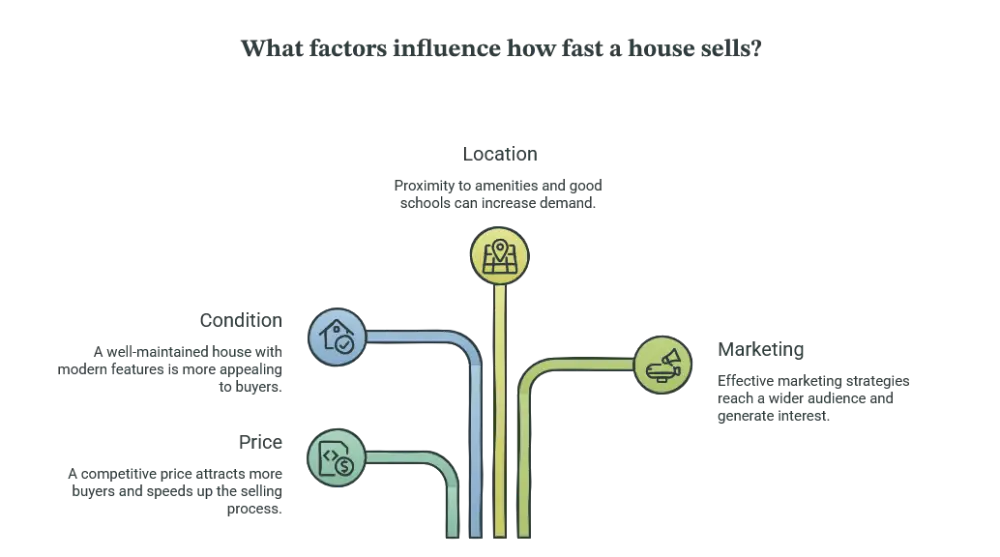
Every home is different, and so is every seller’s situation. Several key factors influence how quickly a house moves from listing to closing.
Local Market Conditions
The strength of your local real estate market has a major impact on your timeline. When there are more buyers than available homes, properties tend to sell faster. When there are more homes than interested buyers, sellers may need to wait longer for the right offer.
Home Condition and Presentation
Buyers are drawn to homes that feel clean, updated, and well maintained. A house that shows well in photos and in person tends to attract more attention and often sells faster than a home that looks neglected or outdated.
Location and Neighborhood Appeal
Location continues to be one of the most influential factors in real estate. Homes in desirable school districts, walkable neighborhoods, or areas with low crime rates tend to attract buyers more quickly than homes in less sought after areas.
Seasonal Timing
Real estate activity tends to ebb and flow throughout the year. Spring and early summer are typically busier seasons for home sales, with more buyers actively searching. Winter months, especially around the holidays, often see a slowdown in buyer activity.
How the Home Is Marketed
Professional photography, an engaging listing description, and strong online visibility can significantly reduce the time your home spends on the market. Homes that are marketed poorly may take longer to catch a buyer’s eye, no matter how nice the property is.
The Offer to Closing Timeline
Once you accept an offer, the sale is not finalized right away. There are still several steps that need to happen before the transaction is complete.
Home Inspection and Appraisal
After an offer is accepted, most buyers will schedule a home inspection to check for any issues with the property. If the buyer is financing the purchase, a lender will also require an appraisal. Both of these steps take time to schedule and complete, and any issues that arise may lead to further negotiation.
Mortgage Approval Process
If your buyer is using a mortgage to purchase the home, the lender will need time to finalize the loan. This includes verifying income, reviewing credit history, and confirming the property’s value. This step is often the longest part of the closing process.
Final Walkthrough and Closing Day
Shortly before closing, the buyer typically does a final walkthrough to confirm the home is in the agreed upon condition. Once everything checks out, both parties sign the final paperwork and ownership officially transfers.
Traditional Sale Versus a Faster Sale Option
Homeowners generally have two main paths when selling a house. The traditional route involves listing with an agent, marketing the property, and waiting for the right buyer. This method often results in a higher level of buyer interest but usually takes longer due to showings, negotiations, and financing timelines.
Alternatively, some homeowners choose to sell directly to a cash buyer or investor. This route tends to move much faster since there is no need to wait on mortgage approval or lengthy negotiations. For sellers who need to move quickly, this can be an appealing option.
Tips to Sell Your House Faster
If your goal is to reduce the time your home spends on the market, there are several steps you can take.
Improve Curb Appeal
First impressions matter. Simple updates like fresh landscaping, a clean exterior, and a tidy entryway can make your home more inviting to potential buyers right from the start.
Declutter and Depersonalize
Buyers need to picture themselves living in the space. Removing excess furniture, personal photos, and clutter helps create a neutral environment that appeals to a wider range of buyers.
Make Small Repairs
Fixing minor issues such as leaky faucets, squeaky doors, or chipped paint shows buyers that the home has been well cared for. These small details can make a big difference in how quickly your home sells.
Be Flexible With Showings
The more accessible your home is for showings, the more potential buyers you allow to view it. Limiting availability can slow down the process and reduce interest.
Work With an Experienced Agent
A knowledgeable real estate agent understands local market trends and buyer behavior. Their expertise can help you position your home effectively and move through the selling process more efficiently.
Conclusion
So, how long does it take to sell a house? The answer varies based on your local market, the condition of your home, how it is marketed, and the path you choose to take, whether that is a traditional sale or a faster alternative. While there is no single timeline that applies to every seller, understanding each stage of the process, from preparation to closing, can help you set realistic expectations and make informed decisions. With the right preparation and strategy, you can help your home move through the market as smoothly and quickly as possible.
Frequently Asked Questions
What is the average time it takes to sell a house?
The average timeline varies by market, but many homes sell within a couple of months from listing to closing when priced and marketed appropriately.
Does the season affect how quickly a house sells?
Yes. Spring and summer tend to bring more buyer activity, while fall and winter often see a slower pace in the real estate market.
How can I speed up the sale of my home?
Improving curb appeal, decluttering, making small repairs, and being flexible with showings can all help attract buyers more quickly.
What takes the longest in the home selling process?
The mortgage approval process for the buyer is often the longest step, since lenders need time to verify financial details and finalize the loan.
Is selling to a cash buyer faster than a traditional sale?
Yes. Selling directly to a cash buyer typically skips the mortgage approval process, which can significantly shorten the overall timeline.