
FHA loan requirements are designed to make homeownership more accessible for buyers who may not qualify for conventional financing. Backed by the Federal Housing Administration, these loans offer flexible qualification standards, making them a popular choice for first time buyers and those with limited savings or credit history. Understanding the requirements involved can help you determine if this loan type is right for your situation.
What Is an FHA Loan
An FHA loan is a government backed mortgage insured by the Federal Housing Administration. Unlike conventional loans, FHA loans are issued by approved lenders but carry federal insurance protection, which reduces risk for lenders and allows them to offer more lenient qualification terms to borrowers.
This insurance is what makes FHA loans attractive to people who might otherwise struggle to secure financing through traditional channels.
Who Offers FHA Loans
FHA loans are not issued directly by the government. Instead, they are provided through FHA approved banks, credit unions, and mortgage companies. The government simply insures the loan, protecting the lender if the borrower defaults.
Basic FHA Loan Requirements
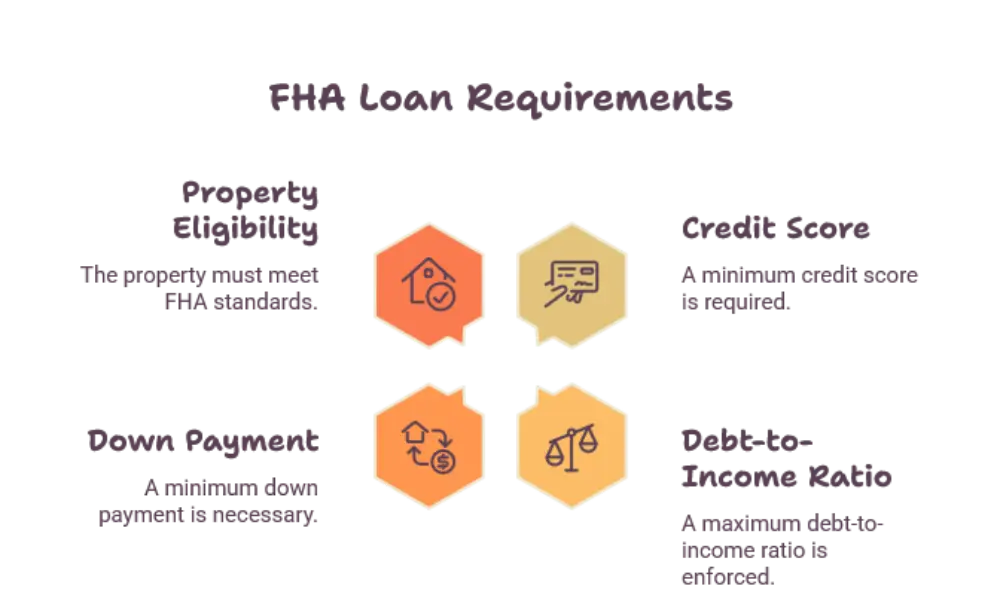
To qualify for an FHA loan, borrowers must meet several core requirements set by the Department of Housing and Urban Development.
Credit Score Requirements
FHA loans are known for their flexible credit standards. Borrowers with a solid credit history typically qualify for lower down payment options, while those with weaker credit may still be eligible, though they may need to put down a larger amount upfront.
This flexibility is one of the biggest advantages of FHA financing compared to conventional loan programs.
Down Payment Requirements
One of the most attractive features of FHA loans is the low down payment requirement. Many borrowers can qualify with a significantly smaller down payment than what conventional loans typically demand.
The exact amount required depends on your credit profile, but the program is structured to lower the barrier to entry for homeownership.
Debt to Income Ratio
Lenders evaluate your debt to income ratio to determine how much of your monthly income goes toward existing debts. FHA guidelines generally allow for a higher debt to income ratio compared to conventional loans, giving more flexibility to borrowers with existing financial obligations like student loans or car payments.
Employment and Income Verification
FHA lenders require proof of steady employment and consistent income. This typically involves submitting pay stubs, tax returns, and bank statements. Lenders want to see a stable work history, generally spanning the past two years, though gaps can sometimes be explained with proper documentation.
Property Requirements for FHA Loans
FHA loans are not just about the borrower. The property itself must meet certain standards.
FHA Appraisal Standards
Every home purchased with an FHA loan must undergo an FHA approved appraisal. This appraisal ensures the property meets minimum safety, security, and soundness standards. Homes with significant structural issues, safety hazards, or major repairs needed may not qualify until those issues are addressed.
Primary Residence Requirement
FHA loans are intended for owner occupied properties. This means the home must serve as your primary residence, not a rental property or vacation home. Investment properties do not qualify for FHA financing.
Approved Property Types
FHA loans can be used for single family homes, multi unit properties up to four units, condominiums in FHA approved developments, and manufactured homes that meet specific guidelines. Each property type has its own set of additional requirements to verify eligibility.
Mortgage Insurance Requirements
Because FHA loans allow for lower down payments and more flexible credit standards, they require mortgage insurance to protect the lender.
Upfront Mortgage Insurance Premium
Borrowers are required to pay an upfront mortgage insurance premium at closing. This premium can often be rolled into the loan amount rather than paid out of pocket immediately.
Annual Mortgage Insurance Premium
In addition to the upfront premium, borrowers also pay an annual mortgage insurance premium, which is divided into monthly installments as part of the mortgage payment. The duration of this insurance depends on the loan term and down payment amount.
Documentation Needed for FHA Loan Approval
Applying for an FHA loan requires gathering specific documents to verify your financial situation.
Personal Identification
Lenders require valid government issued identification along with your Social Security number to verify your identity throughout the application process.
Financial Documents
You will need to provide recent pay stubs, W2 forms, federal tax returns, and bank statements. Self employed borrowers may need to submit additional documentation, such as profit and loss statements, to verify consistent income.
Credit History Documentation
Lenders will pull your credit report to review your payment history, outstanding debts, and overall creditworthiness. Being transparent about any past financial issues, such as bankruptcy or foreclosure, can help streamline the approval process, as FHA guidelines allow for approval after a waiting period in many cases.
Benefits of Choosing an FHA Loan
FHA loans offer several advantages that make them appealing to a wide range of borrowers.
Easier Qualification Process
Because of the flexible credit and income requirements, more borrowers find themselves eligible for FHA loans compared to conventional financing options.
Assumable Loan Feature
FHA loans are assumable, meaning that if you sell your home, the buyer may be able to take over your existing FHA loan under its original terms, which can be an attractive selling point.
Support for First Time Buyers
Many first time buyers turn to FHA loans because of their accessible qualification standards, making the dream of homeownership more attainable for those just entering the housing market.
Common Mistakes to Avoid When Applying
Understanding common pitfalls can help you navigate the FHA loan process more smoothly.
Not Checking Property Eligibility Early
Some buyers fall in love with a property only to discover it does not meet FHA appraisal standards. Always confirm property eligibility before moving forward with an offer.
Overlooking Documentation Requirements
Missing or incomplete documentation can delay the loan approval process significantly. Gather all necessary paperwork early to avoid unnecessary setbacks.
Ignoring Debt to Income Calculations
Failing to account for all existing debts can lead to surprises during the underwriting process. Review your complete financial picture before applying to ensure a smoother experience.
Conclusion
FHA loan requirements are structured to open the door to homeownership for a broader range of buyers, offering flexible credit standards, manageable down payment options, and clear property guidelines. Whether you are a first time buyer or simply looking for a more accessible mortgage option, understanding these requirements is the first step toward a successful home purchase. preparing your documentation, understanding property standards, and knowing what lenders expect, you can move through the FHA loan process with confidence.
Frequently Asked Questions
What credit score is needed for an FHA loan?
FHA loans offer flexible credit requirements, allowing borrowers with less than perfect credit to qualify, often with more lenient standards than conventional loans.
Can I use an FHA loan for a rental property?
No, FHA loans are only available for owner occupied primary residences and cannot be used to finance investment or rental properties.
Do FHA loans require mortgage insurance?
Yes, FHA loans require both an upfront mortgage insurance premium and an annual premium paid monthly as part of your mortgage payment.
What types of homes qualify for FHA loans?
Single family homes, certain multi unit properties, FHA approved condominiums, and qualifying manufactured homes are all eligible property types.
How long does the FHA loan approval process take?
The timeline varies by lender, but having complete documentation and a pre approved property can help speed up the overall approval process.