If you are buying or selling a home, you have probably heard the term closing costs mentioned by your agent, lender, or attorney. Closing costs explained simply are the fees and expenses that both buyers and sellers pay to finalize a real estate transaction. Understanding these costs ahead of time helps you avoid surprises and plan your home purchase with confidence.
In this guide, we will break down what closing costs are, why they exist, who typically pays them, and how you can prepare for them before signing on the dotted line.
What Are Closing Costs?
Closing costs refer to the various fees, services, and administrative charges required to officially transfer ownership of a property from the seller to the buyer. These costs cover everything from loan processing and title work to inspections and insurance.
They are paid at the closing appointment, which is the final step in a real estate transaction where documents are signed and keys are handed over.
Why Do Closing Costs Exist?
Closing costs exist because a real estate transaction involves multiple professionals and institutions working together to make the sale legal, safe, and official. Each of these parties provides a service, and their work needs to be compensated.
These services help protect both the buyer and the seller by verifying legal ownership, checking for outstanding debts on the property, and ensuring the transaction complies with local laws.
Types of Closing Costs
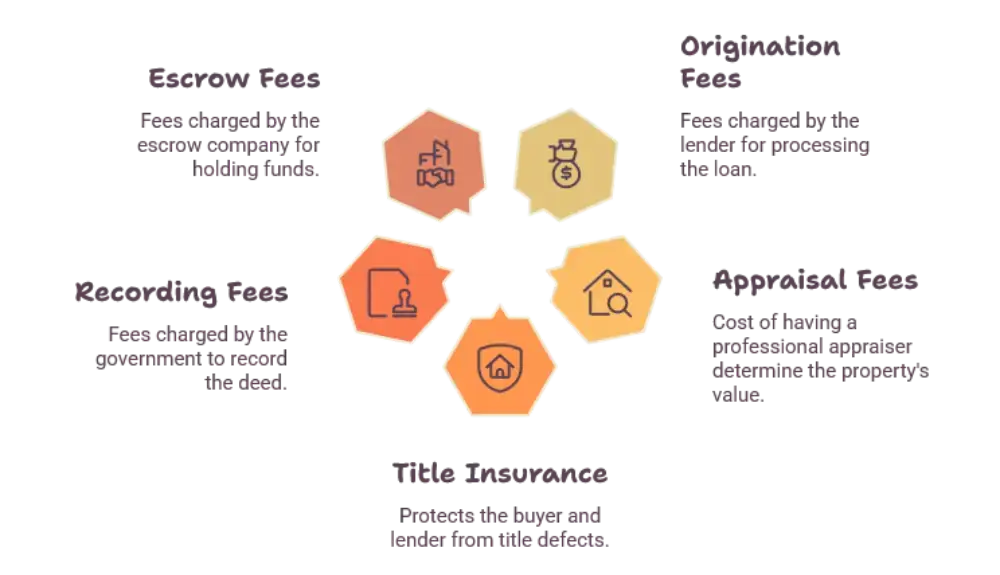
Closing costs are not a single fee. They are a combination of several charges that fall into different categories.
Lender Fees
These are charges from the mortgage company for processing and underwriting the loan. This includes application fees, origination charges, and fees for pulling your credit report.
Third Party Fees
These fees go to outside professionals involved in the transaction such as appraisers, home inspectors, surveyors, and attorneys. Their job is to verify the condition and value of the property before the sale is finalized.
Government and Recording Fees
Local governments charge fees to officially record the change of property ownership in public records. These fees also cover any applicable transfer taxes required by the state or county.
Prepaid Costs
Prepaid costs include items paid in advance such as homeowners insurance premiums and property tax reserves. These are collected upfront to ensure ongoing payments are covered after the sale closes.
Who Pays Closing Costs?
Both buyers and sellers are typically responsible for different portions of closing costs. Buyers usually cover loan related fees, inspection costs, and prepaid items. Sellers often handle costs tied to the title transfer and any outstanding obligations on the property.
In some cases, buyers and sellers negotiate who covers certain fees as part of the purchase agreement. This is often influenced by local market conditions and the terms both parties agree to during negotiations.
How to Estimate Your Closing Costs
Lenders are required to provide a Loan Estimate early in the mortgage process. This document outlines the expected fees associated with your loan and gives you a general idea of what to expect at closing.
Shortly before your closing date, you will also receive a Closing Disclosure. This document provides a final and detailed breakdown of every fee involved in your transaction, allowing you to compare it against your original estimate.
Reviewing Your Loan Estimate
Take time to carefully review your Loan Estimate as soon as you receive it. Ask your lender to explain any fee you do not understand so there are no surprises later in the process.
Comparing the Closing Disclosure
When you receive your Closing Disclosure, compare it line by line with your original Loan Estimate. Significant differences should be discussed with your lender before you proceed to closing.
Ways to Reduce Closing Costs
While closing costs are a normal part of any real estate transaction, there are a few strategies that may help lower the overall amount you pay.
Shop Around for Services
You often have the right to choose your own providers for certain services such as title insurance, inspections, and surveys. Comparing options can help you find better terms.
Ask About Lender Credits
Some lenders offer credits that can offset a portion of your closing costs in exchange for a slightly different loan structure. Ask your lender if this option fits your situation.
Negotiate With the Seller
Depending on market conditions, buyers can sometimes negotiate for the seller to cover a portion of the closing costs as part of the overall deal.
Closing Costs for Buyers vs Sellers
Understanding the difference between buyer and seller responsibilities can help both parties prepare for the transaction more effectively.
Buyer Responsibilities
Buyers generally handle costs related to securing their mortgage, verifying the property condition, and setting up ongoing homeownership expenses like insurance and tax reserves.
Seller Responsibilities
Sellers typically manage costs associated with proving clear ownership of the property, satisfying any existing liens, and paying commissions to real estate professionals involved in the sale.
Common Mistakes to Avoid
Many buyers overlook the full scope of closing costs and are caught off guard on closing day. Avoiding these common mistakes can make the process much smoother.
Not Asking Questions Early
Failing to ask your lender or agent questions early in the process can lead to confusion later. Address any uncertainty as soon as it comes up.
Ignoring the Fine Print
Skimming through documents without reading the details can result in missing important fee information. Take the time to read every section of your Loan Estimate and Closing Disclosure.
Waiting Until the Last Minute
Some buyers wait until closing day to review their costs, leaving little room to ask questions or make adjustments. Reviewing documents as soon as they arrive gives you more flexibility.
Conclusion
Closing costs explained in simple terms are the combined fees required to legally and safely finalize a real estate transaction. From lender charges to government recording fees, each cost plays a role in protecting both buyers and sellers throughout the process.
reviewing your Loan Estimate early, comparing it with your final Closing Disclosure, and asking questions along the way, you can approach closing day with clarity and confidence.
Frequently Asked Questions
What are closing costs in real estate?
Closing costs are the combined fees and charges required to complete a real estate transaction, including lender fees, third party service fees, government recording fees, and prepaid expenses like insurance and taxes.
When do I find out my exact closing costs?
You receive an initial Loan Estimate early in the mortgage process, followed by a final Closing Disclosure shortly before your closing date that outlines the exact fees you will pay.
Can closing costs be negotiated?
Yes, buyers can sometimes negotiate with sellers to cover part of the closing costs, and buyers can also shop around for certain third party services to potentially find better terms.
Are closing costs the same for every property?
No, closing costs vary depending on the location, type of loan, property type, and the specific services required to complete the transaction.
Who typically pays more in closing costs, the buyer or the seller?
Both parties pay different portions of closing costs. Buyers generally cover loan related and prepaid expenses, while sellers often handle costs tied to title transfer and any existing property obligations.