
Real estate has long been recognized as one of the most reliable paths to building lasting financial wealth. Whether you are a first-time buyer looking to diversify your portfolio or a seasoned investor seeking to expand your holdings, having a solid investment property guide at hand can make the difference between a profitable decision and a costly mistake.
This guide walks you through every essential aspect of investing in property, from understanding what investment properties are to evaluating locations, managing finances, and avoiding common pitfalls. the end, you will have a clear roadmap to approach the real estate market with confidence.
- What Is an Investment Property?
- Types of Investment Properties
- Why Invest in Real Estate?
- Key Factors to Evaluate Before Buying
- Financing Your Investment Property
- Property Management: DIY vs. Professional
- Legal and Regulatory Considerations
- Common Mistakes to Avoid
- Building a Long-Term Portfolio
- Final Thoughts
- FAQs
What Is an Investment Property?
An investment property is any real estate purchased with the primary intention of generating income or appreciating in value over time, rather than being used as a primary residence. According to Investopedia, investment properties can generate income through rental yields, capital gains, or both.
Real estate investment encompasses a broad range of property types and strategies. Understanding the distinction between your personal home and an investment property is critical, as the two differ significantly in terms of financing terms, tax treatment, and long-term financial goals.
Types of Investment Properties
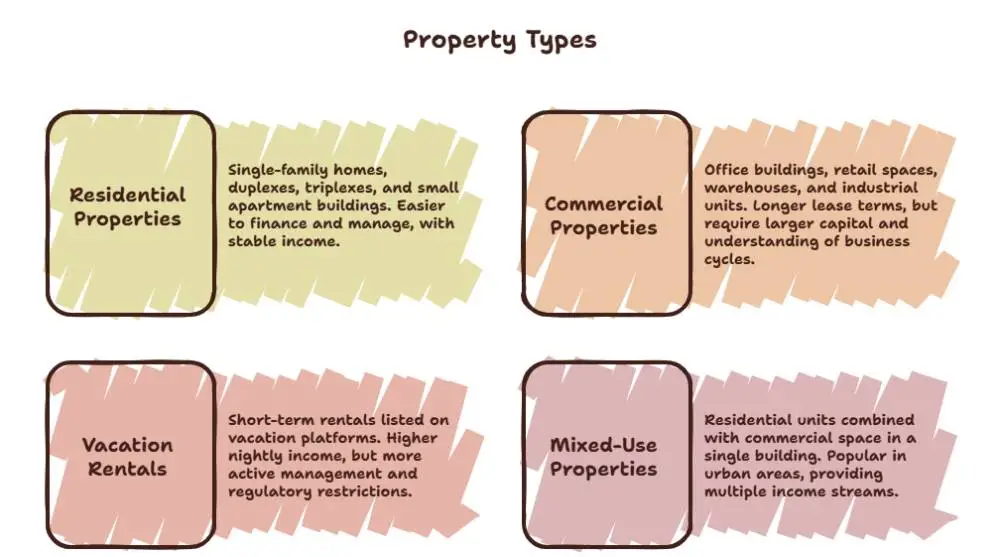
One of the first decisions you will make is choosing the right type of property. Each category comes with its own set of opportunities and responsibilities.
Residential Properties
Residential investment properties include single-family homes, duplexes, triplexes, and small apartment buildings. These are typically the starting point for new investors because they are easier to finance and manage. Tenants in residential properties are often long-term renters, which provides a more stable and predictable income stream.
Commercial Properties
Commercial real estate includes office buildings, retail spaces, warehouses, and industrial units. These properties often come with longer lease terms, which reduces vacancy risk. However, they generally require a larger upfront capital commitment and a deeper understanding of business cycles and local economic conditions.
Vacation and Short-Term Rentals
Short-term rentals, such as those listed on vacation platforms, have grown significantly in popularity. While these properties can generate higher nightly income compared to traditional rentals, they also come with more active management requirements, seasonal income fluctuations, and in some cities, regulatory restrictions.
Mixed-Use Properties
Mixed-use developments combine residential units with commercial space in a single building. These are particularly popular in urban areas and can provide multiple streams of income from a single property.
Why Invest in Real Estate?
Real estate investment offers several advantages that make it appealing compared to other asset classes.
The most well-known benefit is passive income generation. Rental income provides a steady monthly cash flow that can supplement or even replace a salary over time. Beyond income, real estate tends to appreciate in value over the long term, meaning the property itself becomes more valuable as the years pass.
Real estate also offers significant tax advantages. In many jurisdictions, investors can deduct mortgage interest, property taxes, insurance, repairs, and depreciation from their taxable income. This can meaningfully reduce the overall tax burden on rental earnings.
Additionally, investing in property allows you to use leverage. putting down a fraction of the total purchase price and financing the rest, you can control a high-value asset while only investing a portion of your own capital.
According to research published by the MIT Center for Real Estate, long-term real estate investments have historically delivered risk-adjusted returns comparable to or exceeding those of publicly traded equities over extended time horizons.
Key Factors to Evaluate Before Buying
Making a smart purchase requires thorough due diligence. Here are the most critical factors to assess before committing to an investment property.
Location
The old saying holds true: location is everything. A property in a high-demand neighborhood with strong employment growth, good schools, and accessible amenities will attract quality tenants and hold its value better over time. Research vacancy rates, population trends, and planned infrastructure development in the area before purchasing.
Cash Flow Analysis
Cash flow is the net income remaining after all expenses have been paid. To calculate it, subtract your total monthly costs, which include mortgage payments, property taxes, insurance, maintenance, and property management fees, from your monthly rental income. Positive cash flow means the property is generating more income than it costs to hold.
Capitalization Rate
The capitalization rate, or cap rate, is a widely used metric to compare the profitability of different properties. It is calculated by dividing the net operating income by the property’s current market value. A higher cap rate generally indicates a higher return, though it may also signal higher risk.
Property Condition and Age
Older properties may come at a lower purchase price but often carry higher maintenance and repair costs. Always commission a thorough professional inspection before finalizing any purchase. Hidden structural issues, outdated plumbing, or electrical problems can quickly erode your profit margins.
Rental Demand
Understanding the local rental market is essential. Look at average vacancy rates, typical rental prices in the area, and tenant demographics. A neighborhood with consistently high rental demand gives you pricing power and reduces the risk of prolonged vacancy.
Financing Your Investment Property
Financing an investment property differs from obtaining a mortgage for a primary residence. Lenders typically require a higher down payment and charge a slightly higher interest rate to offset the additional risk they perceive with investment properties.
Common financing options include conventional bank mortgages, portfolio loans, and private lending. Some investors choose to refinance existing properties to pull out equity and use it as a down payment for additional purchases, a strategy known as the BRRRR method (Buy, Rehab, Rent, Refinance, Repeat).
It is strongly advisable to consult with a qualified mortgage broker or financial advisor before choosing a financing structure. The right loan terms can significantly affect your monthly cash flow and overall return on investment.
As noted by the Urban Land Institute, understanding debt structure and loan covenants is one of the most underestimated aspects of successful real estate investing.
Property Management: DIY vs. Professional
Once you own a rental property, you must decide whether to manage it yourself or hire a professional property management company.
Self-management is cost-effective but time-intensive. You will be responsible for advertising vacancies, screening tenants, collecting rent, handling maintenance requests, and managing legal compliance. This approach works well for investors with nearby properties and the time to stay hands-on.
Professional property management companies typically charge a monthly percentage of rent collected in exchange for handling all landlord responsibilities. While this reduces your net income somewhat, it frees up your time and ensures the property is managed by experienced professionals who understand local tenancy laws.
Legal and Regulatory Considerations
Real estate law varies significantly by country, state, and even municipality. Before purchasing an investment property, it is essential to familiarize yourself with local landlord-tenant laws, zoning regulations, building codes, and fair housing requirements.
You should also structure your investment properly from a legal standpoint. Many experienced investors hold properties through a limited liability company (LLC) or other corporate structure to protect their personal assets from potential lawsuits. According to the Cornell Law School Legal Information Institute, real property ownership carries distinct legal rights and responsibilities that every investor must understand before entering the market.
Ensuring your leases are legally compliant and that all safety standards are met will protect you from liability and help maintain a professional, trustworthy relationship with your tenants.
Common Mistakes to Avoid
Even experienced investors can fall into traps that reduce profitability or create unnecessary stress. Here are some of the most common pitfalls to watch out for.
Overestimating rental income is one of the most frequent errors. New investors often use optimistic projections without accounting for vacancy periods, maintenance costs, or the time needed to find reliable tenants. Always model your returns conservatively.
Skipping professional inspections to save money upfront is another costly mistake. A few hundred dollars spent on a thorough inspection can save tens of thousands in unexpected repairs down the line.
Underestimating the importance of tenant screening is also a common issue. A bad tenant can cause significant damage, fail to pay rent, and create costly eviction proceedings. Always conduct thorough background, credit, and reference checks before signing a lease.
Finally, failing to maintain an adequate cash reserve is dangerous. Unexpected expenses are inevitable in property ownership. Set aside a portion of your rental income each month as a maintenance reserve to cover emergencies without disrupting your cash flow.
Building a Long-Term Portfolio
Successful real estate investors rarely stop at one property. The goal for most is to gradually build a diversified portfolio that generates enough passive income to achieve financial independence.
Start with a single property you can manage comfortably, learn from the experience, and reinvest your profits. Over time, you can scale by adding additional properties, exploring different markets, or moving into different property types to diversify your income streams.
Patience and consistency are the defining traits of successful property investors. Real estate is not a get-rich-quick strategy. It is a long-term wealth-building vehicle that rewards careful planning, ongoing education, and disciplined financial management.
Final Thoughts
This investment property guide has covered the core principles every aspiring real estate investor needs to understand, from property types and location analysis to financing, legal considerations, and portfolio growth strategies. The real estate market offers tremendous opportunity for those who approach it with preparation and a clear strategy.
Do your research, build the right team of professionals around you, and invest with a long-term mindset. Whether your goal is to supplement your income, fund your retirement, or achieve full financial freedom, investment property can be one of the most powerful tools in your financial arsenal.
FAQs
How much money do I need to start investing in property?
The amount required depends on the property type, location, and financing method you choose. Most lenders require a down payment of between 15 and 25 percent for an investment property, plus additional funds to cover closing costs, initial repairs, and a cash reserve for emergencies. Starting with a smaller residential property in an affordable market is a practical way to enter real estate investing without needing a large upfront sum.
Is rental income considered taxable?
Yes, rental income is generally considered taxable income in most countries. However, investors are typically allowed to deduct a range of expenses from their rental income before calculating their tax liability. These deductions can include mortgage interest, property taxes, insurance premiums, repair costs, and depreciation. It is advisable to work with a qualified tax professional to ensure you are claiming all eligible deductions correctly.
What is a good return on an investment property?
A commonly referenced benchmark is a capitalization rate of between 5 and 10 percent, though what is considered a good return varies depending on the local market, property type, and your overall investment strategy. Beyond the cap rate, many investors also evaluate cash-on-cash return, which measures the annual pre-tax cash flow relative to the total cash invested. A positive cash flow from day one is generally the minimum standard most investors aim for.
Should I invest in residential or commercial property?
The right choice depends on your experience level, available capital, and investment goals. Residential properties are generally easier to finance and manage, making them a more accessible starting point for new investors. Commercial properties tend to offer longer lease terms and potentially higher returns but come with greater complexity and a higher barrier to entry. Many investors begin with residential real estate and gradually expand into commercial assets as their portfolio and knowledge grow.
How do I find good tenants for my investment property?
Finding reliable tenants starts with thorough screening. Advertise your property on reputable rental platforms and collect applications from prospective tenants. Always conduct a background check, credit check, and employment verification, and contact previous landlords for references. Setting clear expectations from the beginning, using a professionally drafted lease agreement, and maintaining the property to a high standard will also help attract and retain responsible, long-term tenants.