Buying a home is one of the biggest financial and emotional decisions most people will ever make. Whether you are purchasing your very first property or moving into your next chapter, having a clear Home Buying Checklist can make the entire process feel manageable instead of overwhelming. From getting your finances in order to closing the deal, every step matters, and skipping even one can lead to unnecessary stress or costly mistakes later on.
This guide walks you through every stage of the home buying journey, breaking it down into simple, actionable steps. following this Home Buying Checklist, you will know exactly what to do, when to do it, and what to watch out for along the way.
- Why You Need a Home Buying Checklist
- Step One: Assess Your Financial Readiness
- Step Two: Get Pre Approved for a Mortgage
- Step Three: Define Your Needs and Wants
- Step Four: Start House Hunting
- Step Five: Make an Offer
- Step Six: Schedule a Home Inspection
- Step Seven: Finalize Your Mortgage
- Step Eight: Conduct a Final Walkthrough
- Step Nine: Close on Your Home
- Step Ten: Plan Your Move
- Final Thoughts
- Frequently Asked Questions
Why You Need a Home Buying Checklist
Purchasing a home involves dozens of moving parts, including paperwork, inspections, negotiations, and financial planning. Without a structured approach, it is easy to forget important details or rush through critical steps. A well organized checklist keeps you focused, reduces anxiety, and ensures that nothing slips through the cracks.
Key points to remember:
The home buying process typically takes several weeks to a few months from start to finish Staying organized helps you avoid last minute surprises A checklist gives you a clear roadmap so you always know your next step
Step One: Assess Your Financial Readiness
Before you even think about browsing listings, take a close look at your financial situation. This is the foundation of any successful Home Buying Checklist.
Start by reviewing your credit report and score, since this plays a major role in determining your eligibility and loan terms. Next, calculate your monthly income and expenses to understand how much you can comfortably afford each month without straining your budget.
It also helps to set aside funds for a down payment, closing costs, moving expenses, and an emergency fund for unexpected repairs once you move in. Many buyers underestimate the additional costs beyond the purchase price itself, so planning ahead is essential.
Key points to remember:
Check your credit score and dispute any errors early Create a realistic monthly budget that includes housing costs Save for a down payment as well as additional moving and emergency expenses
Step Two: Get Pre Approved for a Mortgage
Getting pre approved is a crucial part of any Home Buying Checklist because it tells you exactly how much you can borrow and shows sellers that you are a serious buyer. During this stage, a lender will review your income, debts, assets, and credit history to determine your borrowing capacity.
Having a pre approval letter in hand strengthens your position when making an offer, especially in competitive markets. It also helps you narrow your home search to properties that fit within your realistic budget, saving you time and avoiding disappointment.
Key points to remember:
Gather your financial documents such as pay stubs, tax returns, and bank statements Compare offers from a few different lenders before deciding Keep your pre approval letter updated throughout your search
Step Three: Define Your Needs and Wants
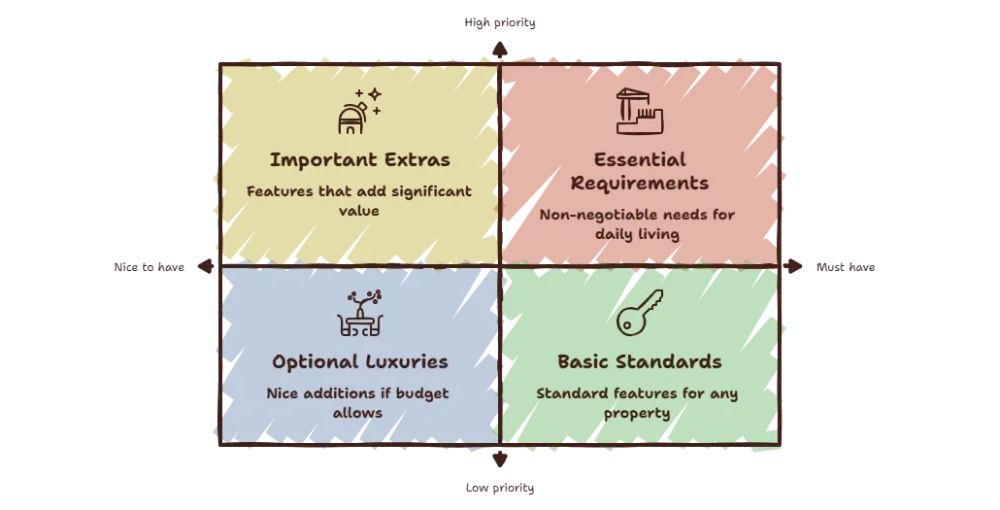
Once your finances are in order, it is time to think about what you actually want in a home. Make a list of must have features versus nice to have features. This will help you stay focused during your search and avoid getting distracted by properties that do not truly fit your lifestyle.
Think about the number of bedrooms and bathrooms you need, the size of the yard, proximity to work or schools, and the type of neighborhood you prefer. Consider your long term plans as well, such as whether you might need more space in the future for a growing family or a home office.
Key points to remember:
Separate your must haves from your wish list items Think about your lifestyle needs for the next five to ten years Consider commute times, school districts, and neighborhood amenities
Step Four: Start House Hunting
With your budget and preferences clearly defined, you can begin actively searching for homes. This is often the most exciting part of the Home Buying Checklist, but it is important to stay patient and thorough.
Attend open houses and schedule private showings whenever possible. Take notes and photos during each visit so you can compare properties later. Pay attention not just to the interior of the home but also to the surrounding neighborhood, noise levels, and overall condition of the property.
Key points to remember:
Visit homes in person whenever possible rather than relying only on photos Take detailed notes after each showing to compare properties accurately Pay attention to the neighborhood and surrounding area, not just the house itself
Step Five: Make an Offer
Once you find a home that checks the right boxes, it is time to make an offer. This step typically involves working closely with a real estate professional who can help you craft a competitive offer based on current market conditions and comparable properties in the area.
Your offer should include contingencies that protect you, such as a home inspection contingency and a financing contingency. These clauses give you the ability to back out of the deal if significant issues arise during the inspection or if your financing falls through.
Key points to remember:
Include contingencies to protect yourself during the negotiation process Be prepared for some back and forth negotiation with the seller Stay flexible but know your limits before entering negotiations
Step Six: Schedule a Home Inspection
A thorough home inspection is one of the most important steps in any Home Buying Checklist. This process involves hiring a licensed inspector to examine the property for structural issues, electrical problems, plumbing concerns, and other potential red flags that may not be visible during a casual walkthrough.
If the inspection reveals significant problems, you may be able to negotiate repairs with the seller or adjust your offer accordingly. Skipping this step can lead to expensive surprises down the road, so it is never worth cutting corners here.
Key points to remember:
Hire a qualified and licensed home inspector Attend the inspection in person if possible to ask questions Use the inspection report to negotiate repairs or credits if needed
Step Seven: Finalize Your Mortgage
After your offer is accepted and the inspection is complete, it is time to finalize your mortgage with your chosen lender. This stage involves submitting additional documentation, having the property appraised, and waiting for final loan approval.
The appraisal ensures that the home is worth the amount being financed, which protects both you and the lender. Stay in close communication with your loan officer during this period to avoid any last minute delays.
Key points to remember:
Respond quickly to any document requests from your lender Avoid making large purchases or opening new credit accounts during this period Review your loan terms carefully before signing
Step Eight: Conduct a Final Walkthrough
Just before closing, schedule a final walkthrough of the property. This is your last opportunity to confirm that the home is in the agreed upon condition and that any negotiated repairs have been completed properly.
Check that all included appliances and fixtures are present and in working order. If you notice any issues during this walkthrough, address them with your real estate agent before moving forward to the closing table.
Key points to remember:
Verify that all agreed upon repairs have been completed Test major appliances, faucets, and electrical outlets Confirm that the property is empty and clean if required by the contract
Step Nine: Close on Your Home
Closing day is the final step in your Home Buying Checklist. During this meeting, you will sign a stack of legal documents, pay any remaining closing costs, and officially receive the keys to your new home.
It is wise to review all closing documents carefully and ask questions about anything you do not understand. Once everything is signed and funds are transferred, the home officially becomes yours.
Key points to remember:
Bring valid identification and any required documents to closing Review the closing disclosure carefully before signing Ask questions if any terms or fees are unclear
Step Ten: Plan Your Move
With the keys in hand, the last part of the process involves planning your actual move. Update your address with relevant institutions, transfer or set up utilities, and create a moving timeline to keep things organized.
Taking time to plan this stage properly will make your transition into the new home much smoother and less stressful.
Key points to remember:
Update your address with banks, employers, and subscription services Schedule utility transfers ahead of your move in date Create a packing and moving timeline to stay organized
Final Thoughts
Following a structured Home Buying Checklist transforms what can feel like an overwhelming process into a series of manageable steps. From assessing your finances to finally closing on your new home, each stage builds upon the last to set you up for long term success and peace of mind.
Take your time, stay organized, and do not hesitate to ask questions throughout the journey. With careful planning and the right checklist in hand, you will be well prepared to navigate the path to homeownership with confidence.
Frequently Asked Questions
What is the first step in a Home Buying Checklist?
The first step is assessing your financial readiness, which includes reviewing your credit score, calculating your budget, and saving for a down payment and closing costs.
How long does the home buying process usually take?
The process typically takes anywhere from a few weeks to several months, depending on factors such as financing, negotiations, and how quickly you find the right property.
Why is a home inspection important when buying a house?
A home inspection helps uncover hidden issues such as structural damage or electrical problems, giving you the opportunity to negotiate repairs or reconsider the purchase before finalizing the deal.
What should I bring to the final closing meeting?
You should bring valid identification, any required financial documents, and be prepared to review and sign the closing disclosure along with other legal paperwork.
Is it necessary to get pre approved before house hunting?
Yes, getting pre approved helps you understand your true budget, strengthens your offer in the eyes of sellers, and saves time by focusing your search on homes within your price range.