Buying your first home is one of the most significant financial decisions you will ever make. It is exciting, emotional, and at times, overwhelming. Whether you have been dreaming of a cozy starter home or a spacious family house, understanding the process from start to finish can make the entire journey far less stressful. These first time home buyer tips are designed to walk you through every critical stage so you can move forward with confidence, clarity, and peace of mind.
The good news is that with the right preparation and knowledge, buying your first home is absolutely achievable. Thousands of people do it every year, and with the guidance in this post, you will be ready to join them.
- 1. Understand What You Can Actually Afford
- 2. Check and Improve Your Credit Score
- 3. Save for a Down Payment and Closing Costs
- 4. Get Pre-Approved for a Mortgage
- 5. Work With a Trusted Real Estate Agent
- 6. Research Neighborhoods Thoroughly
- 7. Never Skip the Home Inspection
- 8. Understand the Mortgage Types Available to You
- 9. Review All Documents Before Signing
- 10. Plan for Life After Closing
- Conclusion
- FAQs
1. Understand What You Can Actually Afford
Before you fall in love with a property, you need to get honest about your finances. Many first time buyers make the mistake of starting with the search rather than the numbers. A clear picture of your financial health will save you heartbreak and wasted time.
Start by calculating your monthly income after taxes, then account for all existing monthly obligations such as student loans, car payments, and credit card minimums. Financial experts generally recommend that your total housing costs, including mortgage, property taxes, and insurance, should not exceed 28 to 30 percent of your gross monthly income. This is a widely accepted benchmark known as the front-end debt-to-income ratio, which lenders carefully evaluate during the approval process.
You should also factor in costs beyond the mortgage itself. Home insurance, property taxes, homeowners association fees, utilities, and regular maintenance can add hundreds of dollars per month to your housing expenses. Thinking through all of these costs upfront gives you a realistic picture of what you can comfortably afford without financial strain.
2. Check and Improve Your Credit Score
Your credit score is one of the most powerful numbers in the home buying process. It directly influences whether you qualify for a loan and what terms you receive. The higher your score, the more favorable your borrowing conditions will be.
According to resources from Consumer Financial Protection Bureau, most conventional loans require a minimum credit score, and government-backed loan programs may allow lower scores with specific conditions. Pull your free credit reports from all three major bureaus and review them carefully for any errors, outdated accounts, or signs of fraud.
To improve your score before applying, pay down existing balances, avoid opening new lines of credit, and make sure all bills are paid on time. Even a modest improvement in your score before you apply can make a meaningful long-term difference in your overall loan costs. Give yourself at least three to six months to work on your credit before beginning a serious home search.
3. Save for a Down Payment and Closing Costs
One of the biggest hurdles for first time buyers is saving enough money upfront. Most conventional mortgages require a down payment ranging from three to twenty percent of the purchase price. While a larger down payment reduces your monthly obligations and eliminates the need for private mortgage insurance, many buyers successfully purchase homes with lower down payment options.
In addition to the down payment, you will need to budget for closing costs. These are fees associated with processing your loan and transferring ownership of the property. Closing costs typically range from two to five percent of the loan amount and include charges for the appraisal, title insurance, attorney fees, and lender fees.
Many states and local governments offer assistance programs specifically for first time buyers. The U.S. Department of Housing and Urban Development maintains a comprehensive list of homebuying programs by state, including grants and low-interest loans designed to help buyers cover down payment and closing costs. Take the time to explore what programs are available in your area before assuming you need to save everything on your own.
4. Get Pre-Approved for a Mortgage
Getting pre-approved for a mortgage is one of the most important steps you can take before you start seriously touring homes. Pre-approval is a formal process in which a lender reviews your financial documents, including income verification, tax returns, bank statements, and credit history, and issues a letter stating how much they are willing to lend you.
A pre-approval letter does several powerful things for you as a buyer. First, it clarifies your true budget so you only look at homes you can realistically purchase. Second, it signals to sellers that you are a serious and qualified buyer, which is especially important in competitive markets where multiple offers are common.
Keep in mind that pre-approval is different from pre-qualification. Pre-qualification is an informal estimate based on self-reported information, while pre-approval involves actual document verification. Sellers and their agents know the difference, so pursuing full pre-approval is always the stronger move.
5. Work With a Trusted Real Estate Agent
Navigating the real estate market without professional guidance is possible, but working with an experienced buyer’s agent makes the process smoother, safer, and often more cost-effective. A good agent brings local market knowledge, negotiation skills, and transactional expertise that can protect you from costly mistakes.
When selecting an agent, look for someone who specializes in working with first time buyers and who communicates clearly and patiently. Ask for references, check online reviews, and make sure you feel comfortable asking questions. The right agent will take the time to explain each step of the process and advocate on your behalf throughout the transaction.
Your agent will help you identify suitable properties, schedule showings, evaluate comparable sales data, and guide you through the offer and negotiation process. Their experience is invaluable when it comes to drafting contract terms that protect your interests and knowing when to walk away from a deal that does not make sense.
6. Research Neighborhoods Thoroughly
The home you buy is important, but so is the neighborhood it sits in. Location has a profound impact on your quality of life, your daily commute, the quality of local schools, and the long-term value of your investment. Take the time to research neighborhoods thoroughly before committing to a specific area.
Visit the neighborhoods you are considering at different times of the day and different days of the week to get an authentic sense of the environment. Pay attention to nearby amenities such as grocery stores, parks, medical facilities, and public transportation. Look into school district quality even if you do not currently have children, as it influences resale value significantly.
The concept of location value in real estate is well documented in academic literature. Studies from institutions such as Harvard’s Joint Center for Housing Studies consistently show that neighborhood factors, including school quality, walkability, and proximity to employment centers, have a substantial effect on home values over time.
7. Never Skip the Home Inspection
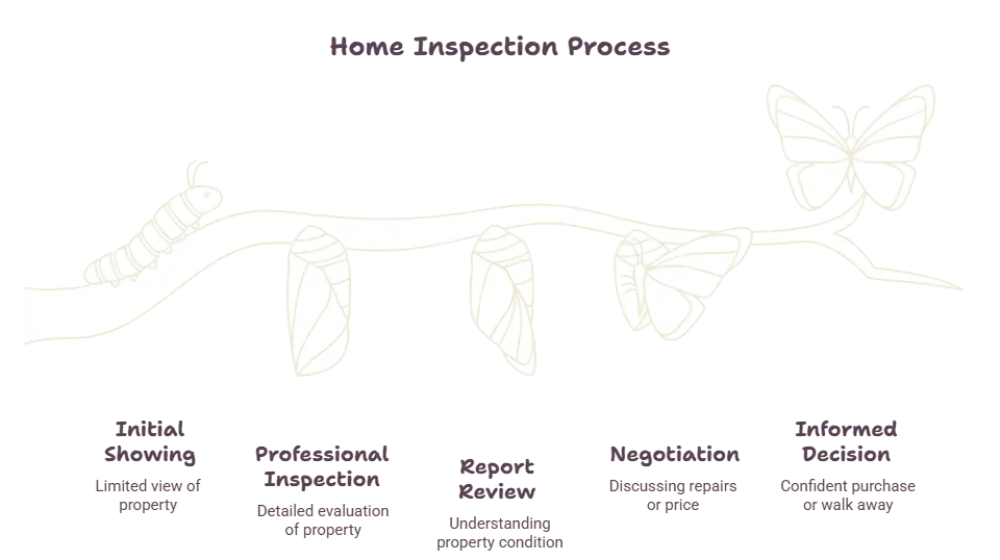
A home inspection is one of the most critical steps in the buying process, and skipping it is a mistake no first time buyer should make. A professional home inspector will evaluate the condition of the property’s structure, roof, electrical systems, plumbing, HVAC, and more, providing you with a detailed written report.
The inspection gives you an informed view of what you are buying and uncovers any issues that may not be visible during a regular showing. If significant problems are discovered, you have the right to negotiate with the seller for repairs, a price reduction, or a repair credit before closing. In some cases, the findings may lead you to walk away from a purchase that would have become a financial burden.
Always attend the inspection in person. Walking through the home with the inspector and asking questions in real time gives you a much deeper understanding of the property than simply reading the report afterward.
8. Understand the Mortgage Types Available to You
There are several types of mortgage products available to first time buyers, and understanding your options allows you to choose the one that best fits your financial situation and long-term goals.
Fixed-rate mortgages offer a consistent interest rate and monthly payment throughout the life of the loan, providing stability and predictability. Adjustable-rate mortgages start with a lower rate that adjusts periodically based on market conditions, which can be beneficial if you plan to sell or refinance within a few years.
Government-backed loan programs, including those offered through the Federal Housing Administration, the Department of Veterans Affairs for eligible military buyers, and the USDA for rural homebuyers, provide accessible options with lower down payment requirements and flexible qualification standards. Understanding the full structure of a mortgage, including amortization, escrow, and interest calculations, helps buyers make more informed financial decisions over the life of the loan.
9. Review All Documents Before Signing
The closing process involves a significant amount of paperwork, and it can feel overwhelming when you are sitting at the table eager to get your keys. However, reviewing every document carefully before signing is essential. Mistakes in loan documents, title paperwork, or closing disclosures can cause serious problems down the road.
At least three business days before your closing date, you will receive a Closing Disclosure, which outlines all the final loan terms and costs. Compare it carefully with your Loan Estimate to identify any discrepancies. If something does not look right, ask your lender or agent to explain it before you sign.
Do not allow anyone to rush you through the closing process. This is likely the largest financial transaction of your life, and you have every right to take the time you need to read and understand every page.
10. Plan for Life After Closing
Many first time buyers focus entirely on getting to the closing table and forget to plan for what comes after. Owning a home brings ongoing responsibilities that renters do not face, including routine maintenance, unexpected repairs, and annual costs like property taxes and insurance renewals.
Financial experts recommend setting aside one to two percent of your home’s value each year in a dedicated home maintenance fund. This cushion protects you from financial stress when major systems like the roof, water heater, or HVAC eventually need attention.
Beyond the financial side, take time to get to know your new community. Introduce yourself to neighbors, learn the local ordinances, and familiarize yourself with your home’s systems so you can act quickly if something goes wrong.
Conclusion
Buying your first home is a journey that rewards preparation, patience, and the willingness to ask questions. understanding your budget, strengthening your credit, saving strategically, and working with trusted professionals, you can move through the process with confidence. These first time home buyer tips are your roadmap to making one of life’s most meaningful milestones a success.
The path to homeownership is rarely perfectly smooth, but with the right knowledge and support, it is one of the most rewarding journeys you will ever take. Your first home is out there waiting for you.
FAQs
How much money do I need saved before buying my first home?
As a general rule, you should aim to save enough to cover your down payment, closing costs, and a small emergency reserve. Down payments can range from three percent to twenty percent of the purchase price depending on the loan type you qualify for. Closing costs typically add another two to five percent of the loan amount. On top of that, having two to three months of living expenses set aside gives you a financial safety net for unexpected costs that arise right after moving in. The exact amount will vary based on the price of the home and your location, but starting to save early and consistently is the most important step.
What credit score do I need to buy a home for the first time?
The credit score you need depends on the type of mortgage you are applying for. Conventional loans typically require a score of at least 620, while government-backed programs such as FHA loans may accept lower scores with a higher down payment. The higher your credit score, the more favorable your loan terms will generally be. If your score is not where you want it to be right now, it is worth spending three to six months paying down debt, correcting any errors on your credit report, and building a consistent on-time payment history before applying.
How long does the home buying process take from start to finish?
The timeline varies depending on your local market, your financial readiness, and the availability of homes in your price range. On average, the process from getting pre-approved to closing on a home takes anywhere from two to six months. In highly competitive markets, it can take longer due to bidding wars or limited inventory. The closing process itself, once your offer is accepted, typically takes 30 to 45 days. Being financially prepared and having all your documents organized in advance can help speed things up considerably.
Is it better to buy a home or continue renting as a first time buyer?
This is one of the most personal decisions in personal finance and depends on several factors including your financial stability, how long you plan to stay in an area, your career situation, and your lifestyle preferences. Buying builds equity over time and provides long-term stability, while renting offers flexibility and lower upfront costs. If you plan to stay in the same area for at least five years and your finances are in good shape, buying is generally considered a sound long-term investment. If your situation involves frequent moves or financial uncertainty, renting may make more sense in the short term.
Do first time home buyers need to work with a real estate agent?
While it is technically possible to purchase a home without an agent, working with a qualified buyer’s agent is strongly recommended for first time buyers. A buyer’s agent represents your interests throughout the transaction, helps you navigate the negotiation process, and guides you through the legal and financial paperwork involved in purchasing a home. In most cases, the seller pays the buyer’s agent commission, meaning their expertise comes at no direct cost to you. The support, protection, and market knowledge a good agent provides are especially valuable when you are going through the process for the very first time.