Choosing between a fixed vs adjustable rate mortgage is one of the biggest decisions a homebuyer will make. Both loan types help you finance a home, but they work in very different ways when it comes to interest rates, monthly payments, and long term financial planning. Understanding how each option behaves over time can help you choose the mortgage that fits your lifestyle and future goals.
- What Is a Fixed Rate Mortgage?
- What Is an Adjustable Rate Mortgage?
- Key Differences Between Fixed and Adjustable Rate Mortgages
- Advantages of a Fixed Rate Mortgage
- Advantages of an Adjustable Rate Mortgage
- Who Should Choose a Fixed Rate Mortgage?
- Who Should Choose an Adjustable Rate Mortgage?
- How to Decide Between the Two
- Conclusion
- FAQs
What Is a Fixed Rate Mortgage?
A fixed rate mortgage is a home loan where the interest rate stays the same for the entire loan term. Whether you choose a fifteen year or thirty year loan, your interest rate never changes. This means your monthly principal and interest payment remains consistent from the first payment to the last.
Fixed rate mortgages are popular because they offer predictability. Homeowners know exactly what they owe each month, which makes budgeting and long term planning much easier.
How Fixed Rate Mortgages Work
When you lock in a fixed rate, that rate is protected from market fluctuations. Even if broader interest rates rise significantly after you close on your loan, your rate remains untouched. This stability is one of the main reasons fixed rate loans are the most common choice among homeowners.
What Is an Adjustable Rate Mortgage?
An adjustable rate mortgage, often called an ARM, starts with an initial fixed interest rate for a set period, such as five, seven, or ten years. After that introductory period ends, the interest rate adjusts periodically based on market conditions and a specific financial index.
This means your monthly payment can rise or fall over time depending on how interest rates move in the broader economy.
How Adjustable Rate Mortgages Work
Most ARMs are structured with two numbers, such as five over one or seven over one. The first number represents how many years the rate stays fixed, and the second number represents how often the rate adjusts afterward, typically every year. These loans also usually include rate caps that limit how much the interest rate can increase during each adjustment period and over the life of the loan.
Key Differences Between Fixed and Adjustable Rate Mortgages
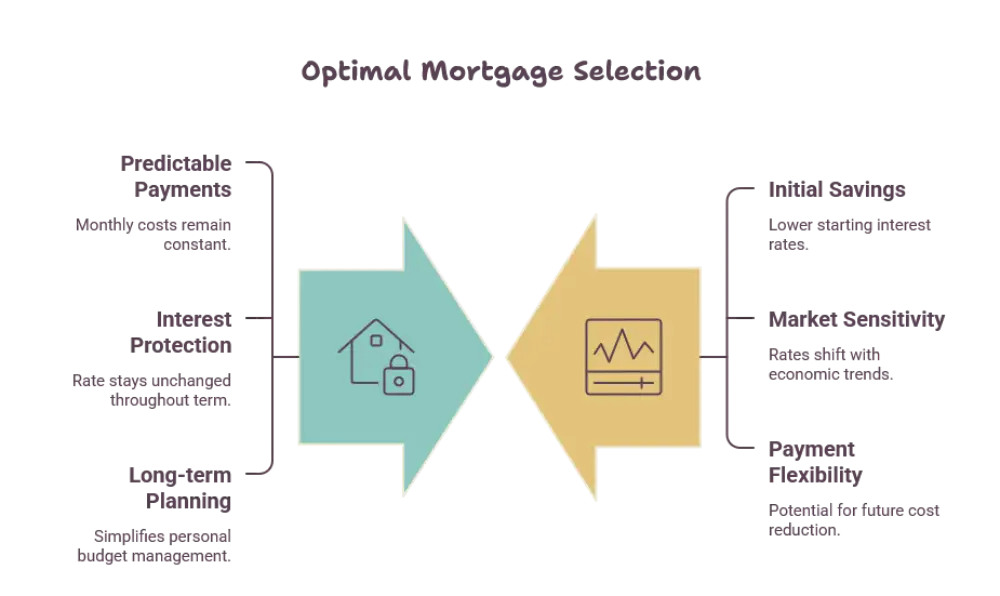
Understanding the core differences between these two mortgage types can help clarify which one aligns with your financial situation.
Interest Rate Stability
Fixed rate mortgages offer complete rate stability for the life of the loan. Adjustable rate mortgages offer stability only during the initial fixed period, after which the rate can change based on market movement.
Monthly Payment Predictability
With a fixed rate mortgage, your monthly payment amount for principal and interest never changes. With an adjustable rate mortgage, your payment can increase or decrease once the adjustment period begins, making long term budgeting less predictable.
Risk Factors
Fixed rate loans carry very little risk related to interest rate changes since the rate is locked in from day one. Adjustable rate loans carry more risk because homeowners are exposed to market fluctuations once the introductory period ends. However, ARMs may also offer benefits if interest rates decrease over time.
Advantages of a Fixed Rate Mortgage
Fixed rate mortgages appeal to buyers who value consistency. Because the rate never changes, homeowners can plan their finances with confidence for years or even decades. This option also protects borrowers from sudden payment increases caused by economic shifts, making it a dependable choice for people who plan to stay in their home for a long period of time.
Advantages of an Adjustable Rate Mortgage
Adjustable rate mortgages often start with a lower introductory interest rate compared to fixed rate loans. This can make the initial monthly payments more manageable, especially for buyers who plan to sell or refinance before the adjustable period begins. ARMs can also be beneficial in a declining interest rate environment, since payments may decrease along with market rates.
Who Should Choose a Fixed Rate Mortgage?
A fixed rate mortgage tends to be a strong fit for homeowners who plan to stay in their home for many years. It also suits buyers who prefer predictable payments and want to avoid the uncertainty that comes with market driven rate changes. Families planning long term budgets, retirees on fixed incomes, and first time buyers who want stability often benefit most from this option.
Who Should Choose an Adjustable Rate Mortgage?
An adjustable rate mortgage may work well for buyers who expect to move, sell, or refinance within a few years. It can also suit borrowers who are comfortable with some financial uncertainty and want to take advantage of a lower introductory rate. People in careers with frequent relocation, investors planning short term ownership, or buyers who anticipate rising income may find ARMs to be a practical choice.
How to Decide Between the Two
Choosing between a fixed vs adjustable rate mortgage depends largely on your future plans and comfort with financial uncertainty. Consider how long you intend to stay in the home, how stable your income is, and how comfortable you are with potential payment changes. It also helps to think about current economic trends and how they might affect interest rates in the coming years.
Speaking with a mortgage professional can help clarify which loan type aligns with your personal financial goals. They can walk you through how each option would affect your monthly payment and overall homeownership experience based on your unique situation.
Conclusion
Both fixed and adjustable rate mortgages offer distinct benefits depending on your financial goals and how long you plan to stay in your home. Fixed rate mortgages provide long term stability and predictable payments, while adjustable rate mortgages offer flexibility and potential short term savings. Taking time to evaluate your plans, income stability, and comfort with risk will help you choose the mortgage type that best supports your homeownership journey.
FAQs
What is the main difference between a fixed and adjustable rate mortgage?
A fixed rate mortgage keeps the same interest rate for the entire loan term, while an adjustable rate mortgage has a rate that changes after an initial fixed period.
Is a fixed rate mortgage better for first time homebuyers?
Many first time buyers prefer fixed rate mortgages because they offer predictable payments and long term stability.
Can an adjustable rate mortgage payment go down over time?
Yes, if market interest rates decrease, the payment on an adjustable rate mortgage can also decrease during future adjustment periods.
How long does the fixed period last on an adjustable rate mortgage?
The fixed period varies by loan but commonly lasts five, seven, or ten years before the rate begins to adjust.
Which mortgage type is better for short term homeownership?
An adjustable rate mortgage is often considered for short term homeownership since it may offer a lower initial rate before adjustments begin.