Learning how to find off market properties can completely change the way you search for real estate. Most people only look at public listings, but many homes change hands quietly before they ever reach a website or a yard sign. If you know where to look and who to talk to, you can reach opportunities that most buyers never see.
This guide walks you through practical, proven methods you can start using today.
What Are Off Market Properties?
Off market properties are homes, land, or buildings that are for sale but not publicly advertised. They do not appear on major listing websites or the multiple listing service.
Owners choose this route for many reasons. Some want privacy. Some want a fast and simple sale. Others have not decided to sell yet but would consider the right offer.
Because these properties stay out of the spotlight, finding them takes effort and creativity.
Why Off Market Properties Are Worth Searching For
There are good reasons serious buyers and investors chase these opportunities.
Less public attention. When a property is not widely advertised, you often get more time to evaluate it.
Room to negotiate. Sellers who skip the public process may value convenience and certainty over everything else.
Better selection. Many quality properties never reach the open market, so searching privately widens your options.
Stronger relationships. The connections you build while searching often lead to more opportunities later.
Proven Ways to Find Off Market Properties
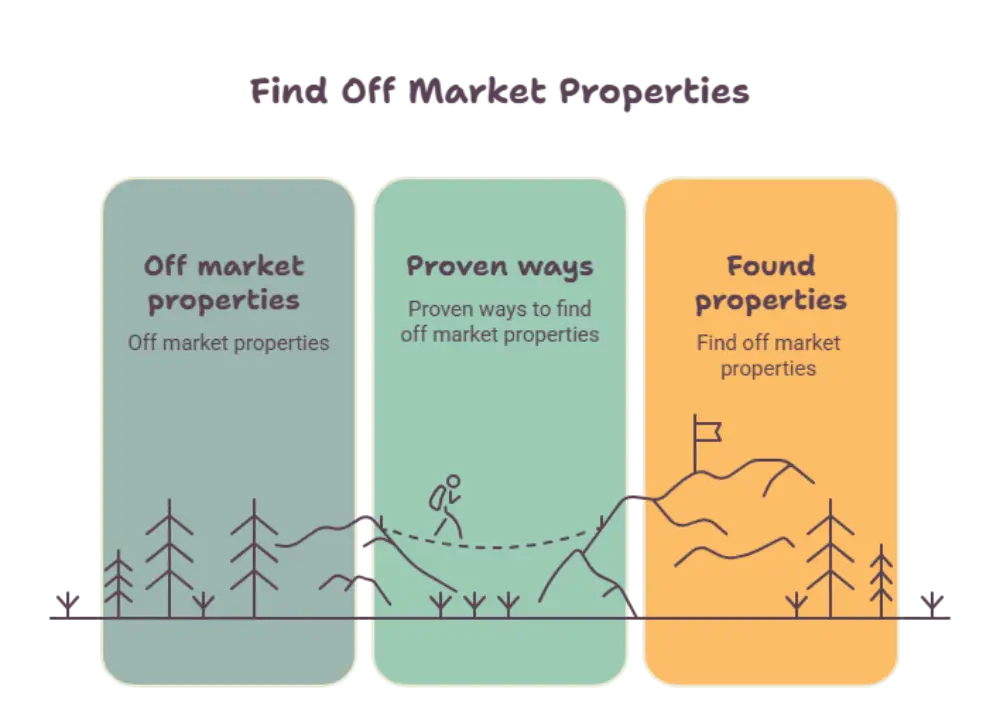
There is no single secret method. The most successful buyers combine several approaches and stay consistent.
Build Relationships With Real Estate Agents
Agents often hear about upcoming sales before anyone else. A seller may mention they are thinking about moving, or an agent may have a client who wants a quiet sale.
Tell local agents exactly what you are looking for. Share your preferred areas, property types, and timeline. Agents remember buyers who are clear, serious, and easy to work with.
Follow up regularly with a friendly message. Staying visible keeps you at the top of their minds.
Network With Local Investors and Wholesalers
Local investors and wholesalers are often the first to find unlisted deals. Many of them are happy to share leads or partner on projects.
Attend local real estate meetups and investor groups. Introduce yourself, listen more than you talk, and offer value where you can.
Trust grows over time. Once people know you are reliable, leads start finding you.
Try Driving for Dollars
Driving for dollars means exploring neighborhoods and noting properties that look neglected or empty. Signs include overgrown lawns, boarded windows, piled up mail, and peeling paint.
Write down each address and take a photo. Then research the owner through public records and reach out.
This method takes patience, but it uncovers properties that no database will show you.
Send Direct Mail to Property Owners
Direct mail remains one of the most effective ways to start a conversation with an owner who is not actively selling.
Keep your message short, polite, and personal. Explain who you are and that you are interested in buying in their area. Avoid pressure and sales language.
Consistency matters here. Many owners respond only after receiving a second or third letter.
Use Public Records and County Data
Public records hold a wealth of information. County offices and online portals can show you ownership details, property history, and tax status.
Useful groups to look for include:
- Owners who live out of town or out of state
- Owners who have held a property for many years
- Properties with long vacant periods
- Properties tied to estates
These owners are often more open to selling because the property may feel like a burden rather than an asset.
Look for Distressed Situations
Some owners need to sell quickly because of circumstances beyond their control. These can include pre foreclosure notices, tax delinquency, probate, divorce, or inherited property.
Approach these situations with care and empathy. The goal is to offer a helpful solution, not to take advantage of someone going through a hard time.
A respectful tone builds trust and leads to better outcomes for everyone involved.
Talk to Local Professionals
Many local professionals know about upcoming sales long before the public does. Consider building relationships with:
- Real estate attorneys
- Property managers
- Mortgage brokers
- Contractors and inspectors
- Estate planners and accountants
You do not need to ask for leads right away. Let them know what you are looking for, and they will think of you when something fits.
Use Social Media and Online Communities
Social platforms can be a surprisingly good source of leads. Local community groups, neighborhood pages, and real estate forums often feature owners hinting at a sale.
Post a short, honest message saying you are looking to buy in a specific area. You may be surprised by the replies.
Always stay professional and transparent about who you are and what you want.
Knock on Doors
Door knocking may feel uncomfortable, but it works. A friendly face to face conversation builds trust faster than any letter.
Be polite and respectful. Introduce yourself, explain why you are there, and leave a simple note if no one answers.
Even if the owner is not interested today, they will remember you if their situation changes.
How to Approach Owners the Right Way
Finding a property is only half the job. How you speak with the owner matters just as much.
Be honest. Say who you are and why you are reaching out. Owners respect directness.
Be patient. Many owners need time to think. Pushing too hard can end the conversation for good.
Listen first. Ask about their situation and goals. Sometimes what they need most is flexibility or a smooth process.
Respect a no. A polite response today may become a yes later.
Common Mistakes to Avoid
Even experienced buyers slip up. Watch out for these common errors.
Giving up too early. Off market searching is a long game. Results come from steady effort.
Sending generic messages. Personal outreach performs far better than copied templates.
Skipping research. Always learn about the property and the owner before making contact.
Ignoring paperwork. Verify ownership, legal status, and property details before moving forward.
Neglecting follow up. Many deals happen months after the first conversation.
Build a Simple System for Long Term Success
The buyers who succeed with off market deals treat the process like a routine, not a one time task.
Keep a simple record of every lead, including the address, owner name, date of contact, and next step. A basic spreadsheet is enough.
Set aside regular time each week for outreach. Even a small amount of steady effort adds up over time.
Review your results often. Notice which methods bring the best leads and spend more time there.
Conclusion
Knowing how to find off market properties gives you a real advantage in any market. The best opportunities often sit just out of sight, waiting for someone willing to look.
Build relationships with agents and local professionals, use public records, and reach out to owners with honesty and respect. Stay consistent and keep improving your approach.
With patience and the right habits, you will uncover properties that others never even know exist.
Frequently Asked Questions
What does off market mean in real estate?
Off market means a property is available for purchase but is not publicly listed. Buyers usually hear about these properties through personal connections, direct outreach, or private networks.
Are off market properties a good option for buyers?
They can be. Off market properties often involve less public attention and more flexibility during negotiation. However, you should still research the property carefully and have it inspected before buying.
How do I find off market properties in my area?
Start by connecting with local agents and investors. You can also use public records, send direct mail, drive through neighborhoods, and talk to local professionals such as attorneys and property managers.
Is it legal to contact homeowners about buying their property?
In most places, yes, as long as you follow local rules and respect do not contact requests. Always be honest about who you are, and check local regulations before starting an outreach campaign.
How long does it take to find an off market deal?
It varies. Some buyers find a lead within weeks, while others need several months. Consistent outreach and strong relationships usually shorten the process.